Building open infrastructure database for the GCC.
GulfInfra is an independent research firm building an open-access infrastructure database for the GCC. We track every disclosed PPP procurement across water, power, desalination, sewage, transmission, waste-to-energy and district cooling - tariffs, winning consortia, prequalified bidders, runner-up bids, financing and timelines.
What we are doing
GCC PPP is one of the most active infrastructure markets in the world, but the data lives in paywalled newsletters and the heads of a few specialists. Bidders price deals without knowing the runner-up tariff. Lenders can't see the full track record. We collect public sources, normalise them, and publish the benchmark for free. Seven industries, 136 procurements, 1999-2030.
Methodology
100% open-source data, verbatim from procurer announcements and reputable trade media. Every non-trivial claim carries at least two independent source links; where a figure isn't publicly disclosed, the row says so. Full source list and verification rules: read the methodology →
This is the GulfInfra database - compiled from publicly available sources to capture the main information about the GCC infrastructure industry. The sidebar groups the work into three sections: Database, Pipeline and Reference.
1. Database
Everything you need to map a GCC infrastructure PPP transaction - seven industries with structured deal records, plus four directories that index every entity touching those deals.
Industries - research tables across seven sectors (ISTP, IWPP, SWRO, Solar IPP, Waste-to-Energy, IWTP, District Cooling). Each deal carries tariff, capex, full bidder lineup, winning consortium with equity split, procurement timeline (RFQ → RFP → bids → preferred bidder → financial close → COD) and source links.
Developers - the developers / EPC contractors / O&M operators competing for concessions. Every sponsor profile shows the deals they have bid on, won or participated in, partnership network and win-rate.
Procurers - the government off-takers running the tenders: SWPC, EWEC, KAPP, PIF, Ashghal, OPWP, NWS and the rest. Each profile lists every deal tendered, by year, with the winner attached.
Advisors - five branches: financial, model audit, legal, technical, plus insurance + environmental. Profiles show the mandates each firm held on the procurer, sponsor or lender side.
Banks - the commercial and development-finance lenders providing project debt - tenor, tranche structure and margin where disclosed.
How the parties fit together
A typical GCC PPP transaction is built around the SPV (project company). The government entity (procurer / offtaker) holds the concession agreement with the SPV and makes availability or tariff payments over the concession term; debt + equity financing flow in from the left; the SPV contracts out construction and operations to the EPC and O&M contractors, who hold an interface agreement between them.
2. Pipeline
Forward-looking surfaces - what's in market, what's been announced, and what's being reported.
Tenders - live procurements grouped by stage (EOI / RFQ / RFP / Bid Submission / Preferred Bidder / Financial Close) plus the announced pipeline that hasn't reached EOI yet.
News - curated deal-flow items from MEED, IJGlobal, The National, Zawya, Reuters, Argaam and sponsor / lender press releases.
3. Reference
Articles - long-form analysis on PPP economics, project finance, bidding strategy, equity IRR, force majeure and the geopolitics shaping GCC tariffs.
Glossary - terminology used across the GCC infrastructure industry: contract types, procurement stages, financing structures, technology acronyms.
Project finance industries
Below are the most popular project finance industries in the Middle East. Click.
An Independent Sewage Treatment Plant (ISTP) is a municipal wastewater facility that receives raw sewage from a city's collection network and converts it, in a continuous flow process, into treated sewage effluent (TSE) clean enough to reuse for irrigation, landscaping, district cooling make-up water and industrial processes. A large GCC ISTP processes 100,000 to 600,000 cubic metres per day - the daily wastewater output of a city of roughly half a million to three million people.
How an ISTP fits in the city water cycle
A high-level view of how municipal wastewater moves through an ISTP and back into the city as treated effluent.
City & homes
Households, offices, hotels and industry where the city's wastewater originates.
Sewer network
The buried collection grid that carries wastewater from buildings to the ISTP inlet.
The treatment plant itself
Where raw sewage is converted into reusable treated effluent.
Reuse network
Pipework that distributes treated sewage effluent (TSE) back into the city for non-potable uses.
Sludge handling
Biomass settled out of the treated water. Dewatered, dried and shipped offsite for disposal or beneficial reuse.
How is the sewage treated?
From raw influent to reusable effluent in five steps.
Click any step in the flow above
Each step opens a short description here. The same five-step backbone runs in every ISTP - what changes between deals is the technology chosen at the secondary and tertiary stages.
What different technologies are used for this?
Technology
What it is
How often it is used
Conventional Activated Sludge
CAS
The old, reliable workhorse. Big open tanks where natural bacteria eat the dirt in the water, then settle to the bottom and clean water flows on. Easy to build, cheapest to run, but takes a lot of land.
Most used
Membrane Bioreactor
MBR
A modern, compact version. Same bacteria as CAS, but the clean water is squeezed out through very fine sieves (membranes) instead of letting it settle. The plant fits on a much smaller site and the water comes out cleaner, but the membranes wear out over time and cost more to run.
Often used
Biological Nutrient Removal
BNR / EBPR
A version of CAS that also strips out nitrogen and phosphorus - the chemicals from fertilisers and detergents that cause algae blooms in rivers and seas.
Sometimes used
Sequencing Batch Reactor
SBR
One tank that does everything in turns - fills up, treats, lets the dirt settle, then empties. Like a washing-machine cycle. Good for smaller plants but doesn't scale up to city size.
Rarely used
Moving Bed Biofilm Reactor
MBBR / IFAS
Small plastic chips floating in the tank that bacteria stick to and grow on. Lets you cram more cleaning into less space - often used to upgrade an old plant without building new tanks.
Sometimes used
Real-world examples
Operational ISTPs from the research dataset.
Dammam West Saudi Arabia
Capacity
200,000 m³/day
Technology
CAS + tertiary filtration
Consortium
Metito + Mowah + Orascom
Operational since
2022 (built 2018-2022 under a 25-year BOOT)
Serves
Dammam metro area, Saudi Arabia's Eastern Province
A classic conventional activated sludge layout - two large round secondary clarifiers in the foreground, rectangular aeration basins behind, admin and chemical buildings along the back. Treated effluent is reused for landscape irrigation across the Eastern Province.
Madinah-3 Saudi Arabia
Capacity
200,000 m³/day (expandable to 375,000)
Technology
Waterleau MBR (membrane bioreactor)
Consortium
Acciona + Tawzea + Tamasuk
Operational since
Q4 2024 (built 2021-2024 under a 25-year BOOT)
Serves
The holy city of Madinah and surrounding districts
One of the newest ISTPs in the GCC and the first to use Waterleau MBR at this scale. The aerial photo shows the discharge outfall - treated effluent flowing out through a turquoise-tiled channel into a polishing pond before being sent to irrigation.
Muharraq Bahrain
Capacity
100,000 m³/day
Technology
CAS + nutrient removal + sludge incineration
Consortium
Samsung Engineering (now Almar)
Operational since
2014 (built 2011-2014 under a 27-year BOO)
Serves
Muharraq island and northern Bahrain
A compact, fully enclosed plant on reclaimed land at the edge of the Gulf. The buildings hide most of the equipment - aeration tanks, clarifiers and tertiary filtration all sit inside the white halls. It is the only GCC ISTP with an on-site sludge incinerator, which turns the leftover sludge into ash for safe disposal.
Sulaibiya Kuwait
Capacity
600,000 m³/day (roughly the daily output of Kuwait City)
2004 (built 2002-2004 under a 30-year BOT, retrofitted 2015-19)
Serves
Greater Kuwait City and surrounding governorates
The first large-scale plant in the world to polish sewage all the way back to near-drinking-water quality using reverse osmosis - and still one of the biggest of its kind by capacity. The bulbous tanks in this photo are part of the membrane filtration line, the heart of the plant.
Database
Current research on independent ISTP tariffs based on the selected projects.
Sewage Treatment Plants in GCC
1 Final tariff against plant capacity
Awarded GCC ISTPs · tariff against plant capacity, categorised by RFP submission date
2 Bigger plants cost less per m³/d - economies of scale
Project cost divided by capacity, against plant size · Project cost = EPC + financing cost till COD + other cost till COD
3 Who is winning the market - sponsor participation
Tracked capacity per sponsor · every named consortium member counted on each deal they won
4 Bid ladder - winning vs runner-up tariffs
L1 (winner), L2 (next-lowest losing bid) and L3 (third-lowest) on the same tariff axis · the wider the spread, the less competitive the field
5 Equity structures
Ownership split where disclosed (%)
6 Where the market is - by country
Tracked capacity and project count by country
7 Process technology mix
Treatment process by project · TBC = not yet specified at bid
8 How long does an ISTP take - RFP to operation
Years from RFP issue to commercial operation · click a bucket for the project list
9 Who shows up at RFQ - top 15 prequalification participants
Number of GCC ISTP deals each name appeared in the RFQ shortlist for
10 Who finances ISTPs - top lenders by deal count
Number of GCC ISTP deals each bank participated in (financing tranche unknown)
11 Bidder funnel - prequalified vs final
Competition health, on deals where the funnel is publicly disclosed
A traditional IPP (Independent Power Project) is a large gas-fired power station, owned by a private company, that sells its electricity to the national grid under a long-term contract - typically 20 to 25 years at a fixed price per kilowatt-hour. A single modern Gulf plant produces 1.5-2.4 GW, sufficient to supply approximately 1.5 million homes.
In the Gulf today, the majority of new traditional IPPs use one of two technologies: CCGT for base-load electricity, and OCGT for fast-start "peaker" plants that operate during demand spikes. Coal and oil-fired plants remain only as legacy assets (Hassyan has since been converted to gas) and no new ones are being commissioned. Renewable power plants such as solar and wind use the same commercial structure but are covered under Renewable Energy; plants that bundle power with drinking water are covered under IWPP.
How an IPP fits the national power grid
The plant sits between the fuel supply (gas in most GCC deals; HFO, diesel or coal historically) and the high-voltage transmission grid (electricity out).
Main technologies: CCGT and OCGT
There are two principal methods to convert natural gas into electricity, and the key difference is the treatment of the residual heat.
OCGT (open-cycle gas turbine) combusts gas, drives a single turbine, generates electricity, and exhausts the hot flue gas directly to the stack. Inexpensive to build and rapid to start, but more than half of the fuel's energy is lost as waste heat. Today OCGT is primarily used as a "peaker" - a smaller plant that operates only for short periods during demand spikes.
CCGT (combined-cycle gas turbine) follows the same initial path, then captures that hot exhaust to boil water and drive a second turbine. The additional stage approximately doubles the useful output: efficiency rises from around 38% (OCGT) to around 60% (CCGT). This is the default technology for the majority of new large Gulf power plants.
A short history. Until the late 1990s, OCGT was the default across the Gulf - natural gas was inexpensive at the wellhead, leaving little economic incentive to pursue higher efficiency. CCGT subsequently displaced OCGT in two waves: approximately 2000-2007 at plants such as Taweelah, Shuweihat and Fujairah (~58% efficient), and again from 2018 with larger and higher-temperature turbines at Hassyan, Fujairah F3, Mirfa 2 and Mesaieed (~62% efficient).
The diagram below shows both technologies side by side. The first three steps are identical. After that, OCGT terminates; CCGT continues through two additional steps to recover the residual heat. Click any box to read a description of that step.
Click any step in the flow above
Steps 1-3 are identical between OCGT and CCGT - same compressor, same combustor, same gas turbine. The two technologies diverge at step 4: OCGT exhausts straight to atmosphere; CCGT routes that exhaust into a heat-recovery steam generator to drive a second turbine. That single addition is worth ~22 efficiency points.
Available technologies
Technology
What it is
How often it is used
F-class gas turbines
Large gas turbines from Mitsubishi, Siemens and GE
The dominant gas turbine at Gulf plants from 2000 to 2015. Each unit produces 200-280 MW. Approximately 58% efficient when paired with a steam stage (the CCGT configuration). Deployed at Taweelah A2/B, Shuweihat, Fujairah F1/F2 and Rabigh 1.
Often used
H-class gas turbines
Newer, larger, higher-temperature generation from Mitsubishi, Siemens and GE
The current standard for new builds since 2018. Larger (350-600 MW per unit) and operating at higher internal temperatures (approximately 1,600 °C - the blades use specialised heat-resistant coatings to withstand the conditions). Approximately 62% efficient. Deployed at Hassyan, Fujairah F3, Mirfa and Mesaieed.
Most used
OCGT peakers
Single-stage, fast-start "peaker" plants
Smaller, single-stage gas turbines that operate only during periods of peak electricity demand, where high efficiency is not a priority. Approximately 38% efficient, but low capital cost and operational within minutes. Connected to the same gas pipeline as the larger CCGT plants.
Sometimes used
Black-start & grid services
Restart the grid + keep it stable
Some plants include a dedicated auxiliary generator capable of restarting the entire national grid after a total blackout. The larger CCGTs can also adjust output rapidly to maintain grid frequency stability.
Sometimes used
CCUS-ready design
Space reserved for future carbon capture
The most recent plants (Misfah and Duqm, both awarded in early 2026) reserve plot space and tie-in points on site to permit a future carbon-capture unit to be installed and remove CO₂ from the exhaust.
Rarely used
Real-world examples
Operational and awarded IPPs from the dataset. Where the specific plant photo is not yet on file, a sister plant or complex it occupies is shown instead - flagged in the caption.
Riyadh PP11 / Dhuruma IPP Saudi Arabia
Capacity
1,729 MW
Turbine class
F-class CCGT
Consortium
GDF Suez (now ENGIE) + AlJomaih + Sojitz
COD
2013
Serves
Riyadh, 125 km west of the city
The benchmark Saudi IPP: USD 0.028/kWh tariff at award in 2009 - one of the cheapest CCGT tariffs ever signed in the region at the time.
Hassyan IPP UAE
Capacity
2,400 MW
Turbine class
Gas-fired CCGT (originally tendered as coal)
Consortium
ACWA Power + DEWA + Harbin Electric
COD
Converted to gas; phased COD from 2023
Serves
Dubai grid, ~10% of DEWA generation
Originally awarded 2015 as a 2.4 GW clean-coal IPP - the GCC's first - then converted to gas after Dubai's net-zero pivot. Photo shows the Hassyan coastal complex (Hassyan SWRO in frame); the IPP shares the same coastal site.
Fujairah F3 IPP UAE
Capacity
2,400 MW
Turbine class
H-class CCGT
Consortium
Marubeni + Kepco + ENGIE
COD
2023
Serves
Eastern UAE grid via EWEC
A pure-power H-class plant on the Fujairah complex, next to the older F1/F2 IWPPs. Demonstrates the GCC shift from cogeneration to power-only IPPs as desalination unbundles into RO. Photo shows Taweelah B - a representative F-class CCGT complex on the UAE coast; an F3-specific photo is still to be uploaded.
Photo pending
Plant under construction
Mirfa 2 IPP UAE
Capacity
2,000 MW
Turbine class
H-class CCGT
Consortium
EDF + Sumitomo + Kyushu Electric
COD
Awarded 2024, COD 2027
Serves
Western Region of Abu Dhabi, EWEC
Mirfa 2 carries forward the Mirfa 1 IWPP site as a power-only expansion. EDF's first GCC IPP win. Awarded 2024, plant is under construction - no operational photo exists yet.
What is a desalination (SWRO) plant?
Two distinct concepts to note before reading further:
SWRO is the technology - the desalination process itself (Seawater Reverse Osmosis). Other technologies include MED (Multi-Effect Distillation) and MSF (Multi-Stage Flash); both are heat-driven and largely phased out in new builds.
IWP (Independent Water Project) is the commercial structure - the contract under which a private company owns the plant and sells its water to the national utility under a long-term agreement (typically 20-25 years at a fixed price per cubic metre). The same IWP structure can be applied to any of the three technologies above.
In the modern Gulf, the majority of new IWPs use SWRO, and the two terms are often used interchangeably. The dataset on this tab covers the SWRO-as-IWP fleet.
A Seawater Reverse Osmosis (SWRO) plant converts seawater into drinking water by passing it through plastic membranes whose pores are small enough to permit water molecules to pass while blocking salt ions. To overcome the natural osmotic pressure (~28 bar for Gulf seawater), industrial pumps apply pressures of >60 bar. The output is fresh water from one side of the membrane and twice-concentrated brine from the other. Modern GCC SWRO plants produce 300,000-900,000 m³/day - sufficient drinking water for a major city.
"Independent" means the plant is owned by a private project company and sells output to the national water utility under a long-term water purchase agreement. This tab absorbs what used to be the standalone SWRO page.
How desalinated water fits the city water cycle
Sea in at the left, drinking water out to the city on the right. The schematic shows the four stations.
How a SWRO plant works
Five steps from raw seawater to drinking water. Click any step in the diagram to read a description of that stage.
Click any step in the flow above
Five steps from raw seawater to drinking water. The critical step is the final one - the energy-recovery device that reduced modern desalination costs to a level at which water sells for approximately 30-40 US cents per cubic metre.
Available technologies
Technology
What it is
How often it is used
SWRO
Reverse osmosis through plastic membranes
The standard for every new desalination plant in the Gulf. Drives seawater through plastic membranes at very high pressure; water permeates while salt is blocked. Electricity-driven only; no thermal input. Approximately 2.5-3.5 kWh per cubic metre. Deployed at Hassyan, Taweelah RO, Rabigh-3 and all new builds.
Most used
MED
Boil seawater, reuse the steam (heat-driven)
Heats seawater to approximately 70 °C and boils it across a series of stages, reusing the condensation heat from each stage to drive the next. Economically competitive only where free waste heat from a co-located power plant is available, which is why it was integrated with older IWPPs at Sohar and Salalah. Rarely selected for new builds today.
Rarely used (new builds)
MSF
"Flash" boiling at high temperature (heat-driven)
Heats seawater to 90-110 °C and "flashes" it across multiple low-pressure chambers, condensing the resulting steam to produce fresh water. The earliest Gulf desalination technology (Taweelah A2, Shuweihat S1, Fujairah F1 - all 1999-2007). Phased out due to excessive energy consumption.
Phased out
Real-world examples
Operational SWRO plants from the dataset.
Taweelah RO UAE
Capacity
909,000 m³/day (200 MIGD)
Technology
SWRO + UF pretreatment + PX-Q400 ERD
Consortium
ACWA Power + Mubadala + EWEC
COD
2022
Tariff
USD 0.49/m³ (award 2018)
World's largest single-site SWRO at commissioning. Supplies Abu Dhabi's western and northern grids via EWEC.
Hassyan SWRO UAE
Capacity
818,000 m³/day (180 MIGD)
Technology
SWRO with captive solar PV
Consortium
ACWA Power + DEWA
COD
Phased; full COD 2026
Tariff
USD 0.365/m³ - world record at award May 2023
The world's lowest disclosed SWRO tariff at award. Sited next to Hassyan IPP on the Dubai coastal complex.
Rabigh-3 Saudi Arabia
Capacity
600,000 m³/day
Technology
SWRO on Red Sea intake
Consortium
ACWA Power + Saudi Brothers
COD
May 2022
Tariff
USD 0.53/m³ (world record at award Nov 2018)
Held the SWRO tariff record for ~4 years before Hassyan broke it. Red Sea intake is more sensitive to algal blooms than the Gulf - hence the extra-large UF pretreatment.
Jubail SWRO complex Saudi Arabia
Capacity
Jubail-3A: 600k m³/d · Jubail-3B: 570k m³/d
Technology
SWRO + 61 MW captive solar PV (3B)
Consortium
Jubail-3A: ACWA + Acciona · Jubail-3B: ENGIE
COD
3A: 2023 · 3B: 2024
Twin SWRO procurements on Saudi Arabia's Eastern Province Gulf coast. Jubail-3B is the largest captive-solar desal plant in the GCC at announcement.
What is an IWPP?
An Independent Water & Power Project (IWPP) is the cogeneration bundle: a single plant that produces electricity AND fresh water from the same fuel and the same physical heat cycle. Two technologies in one - the gas-fired power island generates electricity, and the waste or bleed heat from the steam turbine drives a thermal desalination block (MSF or MED) bolted onto the same site. A typical GCC IWPP produces ~2 GW of power and ~500,000 m³/day of fresh water from the same plot.
The "IW" half exists because the GCC has no rivers, almost no rainfall and no large freshwater aquifers. Every drop of municipal water has historically come from the sea via desalination - and the cheapest way to desalinate was to ride the waste heat off a gas-turbine power plant. That's why power and water got bundled into one plant for ~25 years. The current shift is toward decoupling: pure-power IPPs (Tab 1) feed pure-water SWRO (Tab 2) on the same grid, and the new-build IWPP pipeline is thinning out.
How an IWPP feeds both cycles
One fuel input on the left; two product outputs - electricity to the grid AND fresh water to the city. The schematic below shows the dual feed.
How cogeneration couples the two
The story unique to this tab: one fuel input drives a CCGT, and the waste or bleed heat off the steam turbine is what powers the desalination block. Click a step.
Click any step in the flow above
The cogeneration trick is the steam bleed: instead of dumping all the bottoming-cycle heat to the condenser, the IWPP diverts a fraction at the right pressure to drive thermal desalination. That single step is what defines an IWPP versus a power-only IPP.
Cogeneration IWPPs from the dataset - dual-product plants.
Taweelah B UAE
Capacity
2,220 MW · 730,000 m³/d
Power tech
F-class CCGT
Desal tech
MED + MSF
Consortium
Marubeni + JERA + Total + TAQA
COD
2008 (brownfield acquisition)
One of the largest cogeneration IWPPs in the Gulf. Abu Dhabi coastal complex - sits next to Taweelah A1/A2.
Umm Al Houl Qatar
Capacity
2,520 MW · 900,000 m³/d
Power tech
F-class CCGT
Desal tech
MED + RO
Consortium
QEWC + Mitsubishi + JERA + QF
COD
2018
~30% of Qatar's electricity and 40% of its water from one site.
Riyadh PP11 / Dhuruma Saudi Arabia
Capacity
1,729 MW (power-only IPP variant)
Power tech
F-class CCGT
Desal tech
n/a - this site is the IPP referenced for the Saudi tariff benchmark
Consortium
ENGIE + AlJomaih + Sojitz
COD
2013
Included here as the IWPP reference point in tariff disclosure. PP11 itself is a pure IPP - shown for cross-comparison with the cogen plants on either side.
Az-Zour North 1 Kuwait
Capacity
1,539 MW · 107 MIGD (~486k m³/d)
Power tech
F-class CCGT
Desal tech
MED
Consortium
ENGIE + Sumitomo + Al-Sagar
COD
2016
Kuwait's first IWPP under the new PPP framework. Demonstrated the transition-era F+MED template.
Database
Current research on traditional independent power projects (IPP) based on the selected projects.
Traditional power plants in GCC
1 Final tariff against plant capacity
Awarded GCC IPPs · tariff against plant capacity, categorised by RFP era
2 Bigger plants cost less per kilowatt - economies of scale
Project cost per kW against plant size · outliers are typically oil-fired, brownfield extensions, or CCUS-ready newbuilds
3 Who is winning the market - sponsor participation
Tracked capacity per sponsor · every named consortium member counted on each deal they won
4 Equity structures
Ownership split where disclosed (%) · click a row to jump to its project
5 Where the market is - by country
Tracked capacity and project count by country
6 Turbine class mix
Power-island technology by project · TBC = not yet specified at bid
7 How long does an IPP take - RFP to operation
Years from RFP issue to commercial operation · click a bucket for the project list
8 Who finances these projects - top lenders by deal count
Number of GCC IPPs deals each bank participated in (financing tranche unknown)
0 of 0 projects
GulfInfraIndependent power producers (IPP) - GCC
Project
Capacity
Tariff
Winner consortium
Fin. close
Capex
EPC value
Database
Current research on independent water projects (IWP) based on the selected projects. GCC SWRO IWP procurements.
Water power plants in GCC
1 Final tariff against plant capacity
Awarded GCC SWRO IWPs · tariff against plant capacity, categorised by RFP era
2 Bigger plants cost less per m³/d - economies of scale
Build cost per m³/d capacity against plant size · legacy plants and brownfield extensions sit above the trend line
3 Who is winning the market - sponsor participation
Tracked capacity per sponsor · every named consortium member counted on each deal they won
4 Where the market is - by country
Tracked capacity and project count by country
5 Process technology mix
Desalination process by project · SWRO is the new standard
6 How long does an SWRO IWP take - RFP to operation
Years from RFP issue to commercial operation
7 Bid ladder - winning vs runner-up tariffs
L1 (winner), L2 (next-lowest losing bid) and L3 (third-lowest) on the same tariff axis · the wider the spread, the less competitive the field
8 Equity structures
Ownership split where disclosed (%)
9 Who shows up at RFQ - top 15 prequalification participants
Number of GCC SWRO IWPs deals each name appeared in the RFQ shortlist for
10 Who finances these projects - top lenders by deal count
Number of GCC SWRO IWPs deals each bank participated in (financing tranche unknown)
11 Bidder funnel - prequalified vs final
Competition health, on deals where the funnel is publicly disclosed
0 of 0 projects
GulfInfraSWRO Independent water producers (IWP) - GCC
Project
Capacity
Tariff
Winner consortium
Fin. close
Capex
EPC value
Database
Current research on independent water and power projects (IWPP) based on the selected projects. GCC cogeneration IWPP procurements. Most IWPP tariffs are commercially confidential due to the dual-product structure; the tariff scatter shows only Dhuruma/PP11 and Al Dur-2 where the dual split is publicly disclosed. Bubble size = power capacity (MW).
IWPP in GCC
1 Disclosed power tariff against capacity
IWPP tariffs are mostly commercial-confidential. Showing only the disclosed dual splits
2 Bigger plants cost less per kW - bundled cogeneration build cost
Total project capex against power capacity · water block bundled into the same capex line so this measures the joint build
3 Who is winning the market - sponsor participation
Tracked power capacity per sponsor · every named consortium member counted
4 Where the market is - by country
Tracked power capacity and project count by country
5 Power-island + desal technology mix
Each project contributes to a Power tag (gas-turbine class) and a Desal tag (MSF / MED / SWRO hybrid) - bars sum to more than the project count
6 How long does an IWPP take - RFP to operation
Years from RFP issue to commercial operation
7 Bid ladder - winning vs runner-up tariffs
L1 (winner), L2 (next-lowest losing bid) and L3 (third-lowest) on the same tariff axis · the wider the spread, the less competitive the field
8 Equity structures
Ownership split where disclosed (%)
9 Who shows up at RFQ - top 15 prequalification participants
Number of GCC IWPP cogen deals each name appeared in the RFQ shortlist for
10 Who finances these projects - top lenders by deal count
Number of GCC IWPP cogen deals each bank participated in (financing tranche unknown)
11 Bidder funnel - prequalified vs final
Competition health, on deals where the funnel is publicly disclosed
0 of 0 projects
GulfInfraIndependent water & power producers (IWPP) - GCC
Project
Capacity
Tariff
Winner consortium
Fin. close
Capex
EPC value
Renewable Energy
What is a Solar IPP?
A solar power plant is a field of photovoltaic (PV) modules that converts sunlight directly into electricity. Modern utility-scale GCC plants cover 10-40 km² of desert, with millions of glass-and-silicon panels mounted on motorised steel racks that pivot east-to-west through the day to track the sun. There are no moving fluids or thermal cycles - sunlight in, electrons out - which makes PV the simplest and fastest-to-build large power asset on the grid.
The GCC has the world's best solar resource: 2,200+ peak sun hours per year, low cloud cover, high direct irradiance. The cost penalty is heat (silicon cells lose ~0.4% efficiency per °C above 25 °C) and dust (sand accumulation requires robotic dry-cleaning every 1-2 weeks). These are engineering problems already solved.
How a PV plant fits the national grid
Sunlight in at the left, electricity out to the grid on the right. The schematic shows the five stations between the desert and the household.
How a PV plant works
Click any step to read what happens at that stage. The same six-step backbone runs in every utility-scale PV plant. The design choices that move project economics are cell chemistry (CdTe, mono-PERC, TOPCon/HJT), mounting (fixed-tilt versus single-axis tracker), and whether a co-located battery system shifts production into the evening peak.
Click any step in the flow above
Each step opens a short description here. The Solar IPP backbone is identical across every utility-scale GCC plant - the design choices that move LCOE are cell chemistry, tracker share, and whether a BESS is bolted on for evening dispatch.
Silicon module that also captures sunlight reflected off bright desert sand from its rear face - adds 8-12% extra output. Cell efficiency 22-23% on the front. Deployed at Al Dhafra, Sudair and Shuaibah 2 (2020-2023 rounds).
Most used
Mono-PERC
Single-sided silicon module - prior generation
The single-sided version of the bifacial design - no rear-face gain. Cell efficiency 22-23%. Deployed at Sakaka, MBR Phase 3 and Sweihan (2017-2019 rounds), before bifacial became standard.
Higher cell efficiency (24-26%) and better heat tolerance than PERC - hold output better in Gulf summer heat. Replacing PERC in 2024+ rounds. Deployed at Khazna, DEWA Phase 6 and Saudi Round 6.
Often used
CdTe thin-film
Cadmium-telluride layer on glass - no silicon
Cadmium telluride deposited directly on glass. Lower efficiency (19-20%) than silicon, but holds output better in extreme heat. Deployed at DEWA Phase 1 and 2 (2017); rarely chosen since.
Sometimes used
CSP
Concentrated Solar Power - mirrors + thermal storage
Mirrors heat molten salt to 565 °C; the hot salt drives a steam turbine and stores heat for hours, enabling dispatch after sunset. Deployed at DEWA Phase 4 (700 MW + 15 hours storage; the 262.4 m tower is the world's tallest).
Rarely used
Real-world examples
Operational and awarded GCC utility-scale solar IPPs from the research dataset. Scroll through or use the arrows to browse.
Photo pending
Al Dhafra Solar PV
Al Dhafra (DPV2) UAE
Capacity
2,000 MW
Technology
~4M bifacial mono-PERC modules on single-axis trackers, ~20 km²
USD 2.42 c/kWh - the world record at the 2017 award
Serves
Abu Dhabi grid via EWEC
The first GCC project to break the USD 0.03/kWh price floor and the template every UAE round since has built on
Photo pending
Sudair 1.5 GW
Sudair 1.5 GW PV Saudi Arabia
Capacity
1,500 MW
Technology
Bifacial mono-PERC modules on single-axis trackers
Consortium
ACWA Power 35% / Badeel (PIF) 35% / Aramco Power 30%
COD
2024 (25-year BOO)
Tariff
USD 12.39/MWh - then the lowest in Saudi Arabia
Serves
Saudi national grid via SPPC
The largest single-site solar plant in the Middle East at the time of award. Sited in Sudair Industrial City north of Riyadh
Photo pending
MBR Solar Park Phase 5
Mohammed bin Rashid Solar Park Phase 5 UAE
Capacity
900 MW
Technology
~5.7M bifacial modules on single-axis trackers
Consortium
DEWA 51% / ACWA Power 24.5% / Gulf Investment Corporation 24.5% (Shuaa Energy 3 SPV)
COD
Jun 2023 (25-year BOO)
Tariff
USD 1.6953 c/kWh - the then-record tariff at the 2019 award
Serves
Dubai grid via DEWA
One phase of the multi-stage MBR Solar Park at Saih Al-Dahal, targeting 5 GW by 2030. Built in three 300 MW units
Photo pending
Sakaka 300 MW
Sakaka 300 MW PV Saudi Arabia
Capacity
300 MW
Technology
Bifacial mono-PERC modules on single-axis trackers
Consortium
ACWA Power 70% / AlGihaz 30%
COD
Q2 2020 (25-year BOO)
Tariff
USD 23.42/MWh - the world record at the 2018 award
Serves
Saudi national grid via SPPC
Saudi Arabia's first utility-scale solar IPP, sited at Al Jouf in the kingdom's north. The reference deal for the REPDO / SPPC procurement programme
What is a Wind IPP?
A wind IPP is a utility-scale wind farm sold under a long-term power purchase agreement, the same architecture as a thermal or solar IPP. Tall steel towers (110-160 m hub height) carry three-bladed horizontal-axis rotors that turn at 10-20 rpm. Each turbine is a 3-6 MW unit; a typical GCC wind IPP strings together 50-200 of them across a high-wind corridor, with internal medium-voltage collection cables running to a single grid-connection substation.
Where the GCC wind resource sits. Wind energy is concentrated in three corridors: NW Saudi Arabia (Northern Borders, Al Jouf, Madinah - this is where Dumat Al Jandal, Yanbu, Waad Al Shamal and Start sit), central Saudi Arabia (the Al Ghat plateau in Riyadh province, where SPPC awarded a 600 MW round in 2024), and southern Oman (the Dhofar coast and the Khareef monsoon corridor - Dhofar Wind, Duqm, Jaalan Bani Bu Ali). Capacity factors in the best GCC sites reach 35-45%, well above the ~25% global average for onshore wind, because the resource is steadier and the seasonal Khareef monsoon delivers months of constant flow.
Why wind matters in the GCC's renewable mix. Wind generates at night and during the shoulder seasons when PV output is low. A pure-solar grid needs huge batteries to bridge the sunset-to-midnight peak; a solar-plus-wind grid needs much less BESS because the two resources offset each other through the daily cycle. Saudi Arabia's NEOM masterplan and Oman's Vision 2040 both treat wind as the firming complement to PV - the cheapest dispatchable-renewable bundle in the region.
How a wind farm fits the national grid
Wind in at the left, electricity out to the grid on the right. The schematic shows the four stations between the corridor and the household.
How a wind turbine works
Click any step to read what happens at that stage. The same six-step backbone runs in every modern wind turbine. The design choices that differ between deals are the drivetrain (geared versus direct-drive) and rotor scale.
Click any step in the flow above
The same six-step backbone runs in every modern wind turbine. GCC sites favour large rotor diameters with moderate hub heights, optimising for the steady mid-range winds along the NW Saudi corridor and the Dhofar coast.
Available technologies
Technology
What it is
How often it is used
Geared turbines (DFIG)
Vestas V150 / V162 - workhorse of Gulf wind
Doubly-fed induction generator with a multi-stage gearbox. Lower capex, higher maintenance. Vestas V150-4.2 powered Dumat Al Jandal.
Often used
Direct-drive turbines (PMSG)
Goldwind GW155 / GE Cypress - no gearbox
Permanent-magnet generator mounted directly on the rotor shaft - no gearbox. Higher capex, simpler maintenance and longer service intervals. Better for remote or harsh sites.
Sometimes used
Large-rotor turbines
170+ m rotors - higher output in moderate winds
170+ m rotors tuned for sites with steady moderate winds rather than strong gusts. Higher capacity factor for the same hub-height wind speed. Deployed at Dhofar Wind on the Khareef monsoon corridor.
Sometimes used
Hybrid steel-concrete towers
Concrete base + steel top for 130-160 m hub heights
Concrete lower section plus steel tubular section above, reaching 130-160 m hub heights economically. Pioneered at Dumat Al Jandal; now standard at Yanbu and Waad Al Shamal.
Often used
Real-world examples
Operational and awarded GCC utility-scale wind IPPs from the research dataset. Scroll through or use the arrows to browse.
Dumat Al Jandal Saudi Arabia
Capacity
400 MW
Technology
99 Vestas V150-4.2 turbines on hybrid steel-concrete towers
Consortium
EDF Renewables + Masdar
COD
2022 (25-year BOO)
Tariff
USD 0.0213/kWh - the GCC benchmark at the 2019 award
Serves
Saudi national grid via SPPC; sited in Al Jouf province
The first utility-scale wind IPP in the GCC. Set the regional benchmark tariff and proved the hybrid steel-concrete tower template that newer rounds have built on.
Yanbu Wind Saudi Arabia
Capacity
700 MW
Technology
Large-rotor turbines on hybrid towers (consortium TBC at financial close)
Round
SPPC Round 4 (2024 award)
COD
Targeted 2027
Serves
Saudi national grid via SPPC; sited in Madinah province on the Red Sea coast
The largest single-site wind project tendered in the Kingdom to date and one of the largest in the GCC.
Waad Al Shamal Wind Saudi Arabia
Capacity
500-600 MW
Technology
Direct-drive turbines (consortium TBC at financial close)
Round
SPPC Round 4 (2024 award)
COD
Targeted 2027
Serves
Saudi national grid via SPPC; sited in the Northern Borders province
Co-located with the Waad Al Shamal phosphate complex, taking advantage of the Northern Borders corridor's steady winds.
Al Ghat Wind Saudi Arabia
Capacity
600 MW
Technology
Large-rotor turbines (consortium TBC at financial close)
Round
Awarded 2024
COD
Targeted 2027
Serves
Saudi national grid via SPPC; sited on the Riyadh-province plateau
The first wind procurement on the central Saudi plateau, opening a new resource region alongside the NW corridor that hosts Dumat Al Jandal and Yanbu.
Dhofar Wind Oman
Capacity
50 MW
Technology
13 GE 3.83-137 turbines, tuned for the Khareef monsoon corridor
Consortium
Masdar + Rural Areas Electricity Company (Tanweer)
COD
2019 (20-year PPA)
Serves
Salalah and the southern Oman grid
The first utility-scale wind plant on the Arabian Peninsula at commissioning. Built around the Khareef monsoon corridor, which delivers months of constant flow each summer.
What is Storage + Hybrid?
This sub-market covers four overlapping plant types: standalone BESS (battery energy storage system, no generation; arbitrages grid energy and provides frequency response), Solar + BESS (PV plant with co-located batteries that shift midday generation into the evening peak), CSP (concentrated solar power plus molten-salt thermal storage; dispatchable through the night), and Round-the-Clock (RtC) hybrids that combine solar, wind and BESS into a single PPA that delivers firm dispatchable power 24/7.
Why it matters: bridging the duck curve. A solar-heavy grid hits a structural problem at sunset - generation drops to zero between 6 and 9 pm while air-conditioning load still peaks. The cheapest dispatchable bridge is storage. Standalone BESS (Saudi SPPC's Bisha, Najran and Khamis Mushait deals, all awarded 2024-2025) provides 4-8 hours of dispatchable energy at capacity-charge tariffs (around USD 13-15 per kW-month, not per kWh). PV+BESS hybrids embed the storage in the generation PPA. RtC bundles take this one step further: SPPC's RtC1 round in 2025 awarded ~USD 0.048/kWh for 24/7 dispatchable solar-plus-wind-plus-BESS - a tariff competitive with new-build CCGT under a carbon-priced future.
Why CSP still matters in the GCC. CSP capex is roughly 3x that of PV, but its built-in thermal storage (molten salt at 565 °C in two-tank systems) gives 15+ hours of dispatch at a far lower marginal cost than batteries. DEWA Phase 4 (the 700 MW solar tower + trough hybrid in Dubai) demonstrated this at scale: PV + CSP + 15h storage in a single bundled PPA, with PV serving the day and CSP serving the night.
How storage fits the national grid
Solar or wind generation in at the left, dispatchable electricity out to the grid on the right. The schematic shows where storage sits between the two: it absorbs midday surplus and releases it into the evening peak when generation has dropped to zero.
How a storage plant works
Two parallel architectures, one shared grid export. The top three boxes on the left describe a BESS-only or PV+BESS plant; the right column shows the CSP path. Click any step to read what happens at that stage.
Click any step in the flow above
Two parallel architectures, one shared grid export. The PV+BESS path uses electrochemical storage and is the cheapest dispatch bridge. The CSP path uses thermal storage and is the only option that delivers 15+ hours of dispatch at competitive cost without batteries.
Available technologies
Technology
What it is
How often it is used
Li-ion LFP batteries
The default Gulf battery chemistry
The default Gulf chemistry. Better thermal stability than NMC alternatives in 50 °C heat. Typical scale 100-2,000 MWh, 2-8 hour duration. Deployed at Bisha, Najran, Khamis Mushait, Jeddah, MBR Phase 7, Ibri 3.
Most used
Vanadium flow batteries
Long-duration tank-based storage
Electrolyte in external tanks pumped through a cell stack. Decouples power from energy - cheaper per MWh at long durations. Indefinite cycle life. Pilot deployments only; no GCC utility-scale deal disclosed yet.
Rarely used
Sodium-ion batteries
Emerging chemistry - more abundant raw materials
Sodium analogue of Li-ion using abundant raw materials. Cheaper at scale than LFP and more tolerant of high heat. CATL and BYD started commercial production in 2024. Tracked as a 2026-2028 option for the next battery rounds.
Emerging
CSP - parabolic trough
Curved mirrors heating an absorber pipe
Parabolic mirrors focus sunlight onto an absorber pipe. Oil-based HTF (~390 °C) drives a steam cycle; optional molten-salt storage enables night dispatch. Deployed at MBR Phase 4 (600 MW trough) and Shagaya CSP Hybrid in Kuwait.
Rarely used
CSP - central tower
Heliostat field + tower receiver with molten salt
Heliostat field focuses sunlight on a tower receiver running molten salt at 565 °C. Higher cycle efficiency and simpler storage integration than troughs. Deployed at MBR Phase 4 (100 MW tower, 262.4 m - the world's tallest).
Rarely used
Round-the-Clock (RtC) hybrid
Bundled solar + wind + BESS under one 24/7 PPA
One PPA bundling large PV + smaller wind + 4-8 hour LFP battery, sized to deliver firm dispatchable MW 24/7. Replaces a peaker without burning gas. Awarded at SPPC RtC1 in 2025 at ~USD 0.048/kWh - the first round-the-clock PPP at this scale.
Sometimes used
Real-world examples
Operational and awarded GCC storage and hybrid PPPs from the research dataset. Scroll through or use the arrows to browse.
DEWA + ACWA Power + Shanghai Electric (Noor Energy 1 SPV)
COD
Phased; central-tower COD 2023
Tower height
262.4 m - the tallest CSP tower in the world at commissioning
The benchmark large-scale CSP project of the decade. Demonstrated 15-hour dispatch and combined-architecture CSP at utility scale.
Bisha BESS Saudi Arabia
Capacity
Standalone LFP battery system
Duration
4-hour discharge
Round
SPPC standalone-BESS round, 2024 award
Serves
Saudi national grid via SPPC; sited in Asir region
One of the first three standalone-BESS PPPs awarded by SPPC. Capacity-charge tariff structure (USD per kW-month) rather than per-kWh.
Najran BESS Saudi Arabia
Capacity
Standalone LFP battery system
Duration
4-hour discharge
Round
SPPC standalone-BESS round, 2024 award
Serves
Saudi national grid via SPPC; sited in Najran province
Second of the three southern BESS awards. Provides evening-peak dispatch to the south-western Saudi load centres.
Khamis Mushait BESS Saudi Arabia
Capacity
Standalone LFP battery system
Duration
4-hour discharge
Round
SPPC standalone-BESS round, 2024 award
Serves
Saudi national grid via SPPC; sited in Asir region
Third of the cluster of southern standalone-BESS awards, paired with Bisha and Najran to firm up evening dispatch across the region.
MBR Solar Park Phase 7 (PV+BESS) UAE
Capacity
1.6 GW PV + 1,000 MW / 6,000 MWh BESS
Duration
6-hour discharge
Consortium
DEWA-led consortium (final SPV TBC at financial close)
COD
Targeted 2027
Serves
Dubai grid via DEWA
One of the largest PV+BESS bundles ever procured worldwide. Sets the template for storage-paired PV in the next round of the energy transition.
Ibri 3 (PV+BESS) Oman
Capacity
Co-located PV + LFP battery storage
Procurer
OPWP
Serves
Oman national grid; sited in the Al Dhahirah region
Oman's first co-located PV-plus-BESS hybrid deal at scale. Sits on the same Ibri solar corridor as Ibri 1 and Ibri 2.
SPPC RtC1 (Round-the-Clock) Saudi Arabia
Capacity
Dispatchable solar + wind + LFP battery bundle
Tariff
~USD 0.048/kWh at 2025 award
Procurer
SPPC
Structure
Single PPA with firm 24/7 dispatch obligation
The first round-the-clock dispatchable-renewables PPP at scale in the Gulf. Replaces peaker capacity without burning gas at a tariff competitive with new-build CCGT.
Database - Solar IPP
GCC Solar IPP procurements. Tariffs in USD/kWh only - never on the same axis as wind or storage tariffs.
Map - Solar IPP
1 Final tariff against plant capacity
Awarded GCC Solar IPPs · USD/kWh tariff against plant capacity, categorised by RFP era
2 Bigger plants cost less per kilowatt - economies of scale
Build cost per kW against plant size · outliers are typically early-vintage thin-film, CSP hybrids, or PV+BESS
3 Who is winning the market - sponsor participation
Tracked capacity per sponsor · every named consortium member counted on each deal they won
4 Where the market is - by country
Tracked capacity and project count by country
5 PV technology mix
Module / mounting / hybrid classification · counted across the dataset
6 How long does a Solar IPP take - RFP to operation
Years from RFP issue to commercial operation
0 of 0 projects
GulfInfraSolar IPP - GCC
Project
Capacity
Tariff
Winner consortium
Fin. close
Capex
EPC value
Database - Wind IPP
GCC Wind IPP procurements. Tariffs in USD/kWh only.
Map - Wind IPP
1 Final tariff against plant capacity
Awarded GCC Wind IPPs · USD/kWh tariff against plant capacity, categorised by RFP era
2 Bigger plants cost less per kilowatt - economies of scale
Build cost per kW against plant size
3 Who is winning the market - sponsor participation
Tracked capacity per sponsor
4 Where the market is - by country
Tracked capacity and project count by country
5 Turbine technology mix
Drivetrain family (geared DFIG vs direct-drive PMSG vs high-altitude low-wind)
6 How long does a Wind IPP take - RFP to operation
Years from RFP issue to commercial operation
0 of 0 projects
GulfInfraWind IPP - GCC
Project
Capacity
Tariff
Winner consortium
Fin. close
Capex
EPC value
Database - Storage + Hybrid
GCC Storage and Hybrid procurements. RtC and CSP deals carry a USD/kWh tariff; standalone BESS deals carry a capacity charge instead - shown as "capacity charge" in the table where the per-kWh value is not the right unit.
Map - Storage + Hybrid
1 Disclosed energy tariff against plant capacity
Awarded GCC Storage + Hybrid · only deals with a per-kWh PPA tariff shown (RtC + CSP + PV+BESS bundles)
2 Bigger plants cost less per kilowatt - economies of scale
Build cost per kW against plant size · CSP at the top, standalone BESS in the middle, PV+BESS at the bottom
3 Who is winning the market - sponsor participation
Tracked capacity per sponsor
4 Where the market is - by country
Tracked capacity and project count by country
5 Plant technology mix
Standalone BESS / PV+BESS / CSP / RtC bundles classified across the dataset
6 How long does it take - RFP to operation
Years from RFP issue to commercial operation
0 of 0 projects
GulfInfraStorage + Hybrid - GCC
Project
Capacity
Tariff
Winner consortium
Fin. close
Capex
EPC value
Waste Management
What is a Waste-to-Energy plant?
A Waste-to-Energy (WtE) plant is a factory that burns municipal solid waste - household rubbish - at over 1,000 °C to make electricity. Rubbish replaces coal or natural gas as the fuel. The heat boils water to steam, the steam drives a turbine, the turbine drives a generator. The result: 70-90% of a city's landfill is avoided, and every ~30-40 kg of waste produces 1 kWh of electricity exported to the grid.
WtE is one of the most heavily-regulated industrial processes in the world because uncontrolled waste combustion produces dioxins, furans, NOx, SO₂, HCl, mercury and particulates. Modern plants use 4-5 stages of flue-gas treatment to drive emissions well below European IED 2010/75/EU limits. Done properly, the bottom-ash residue (15-25% of input mass) is inert enough to use as road sub-base aggregate.
Real-world examples
Operational and awarded GCC Waste-to-Energy plants from the research dataset. Scroll through or use the arrows to browse.
Sharjah Waste-to-Energy Phase 1 UAE
Throughput
~822 t/d (~300 kt/y) / 30 MW gross
Technology
Mass-burn moving grate (CNIM / Martin)
Operator
Emirates Waste to Energy Company (EWTE) - Bee'ah / Tadweer Group 50:50 JV
Status
Operational since May 2022 under a JV / DBOOM
Tariffs
Undisclosed
Serves
SEWA grid
The region's first commercial-scale Waste-to-Energy plant. Masdar exited its 50% stake to Tadweer Group in July 2025
A mega WtE expansion proposal re-engineered to 3,000 t/d (~1 Mt/y), ~QR 2bn (~USD 550M) indicative, is under government evaluation as of November 2025
How a WtE plant fits in the city waste cycle
A high-level view of how municipal solid waste (MSW) moves from households into a WtE plant and where the energy + residual streams go.
How a mass-burn WtE plant works
From refuse-truck tipping bay to stack and grid in six steps. Click any step for detail.
Click any step in the flow above
Each step opens a short description here. The same six-step backbone runs in every mass-burn WtE plant - what differs between deals is grate vendor (Martin / CNIM / Kanadevia Inova / Keppel Seghers), flue-gas treatment philosophy, and whether the heat is co-exported as district hot water.
WtE process technologies
Technology
What it is
How often it is used
Mass-burn moving grate
Industrial-scale reciprocating or roller-grate combustion. Handles mixed unsorted MSW with minimal preprocessing - the workhorse globally. Used at Sharjah (Martin / CNIM), Warsan (Kanadevia Inova / HZI), Al Bihouth (HZI) and Mesaieed (Keppel Seghers)
Most used
Anaerobic digestion + RDF
The organic fraction is anaerobically digested to biogas; the dry fraction is shredded into refuse-derived fuel (RDF) for combustion. A hybrid route for mixed waste streams and a fit for cement-kiln co-firing. Envisioned for the Saudi SIRC integrated PPP
Sometimes used
Gasification
Sub-stoichiometric heating produces a synthesis gas (CO + H₂) that is then burned in a separate combustion chamber or fed to an internal-combustion engine. Cleaner emissions but unproven at commercial GCC scale. Considered for Kabd Kuwait, where mass-burn was ultimately selected
Rarely used
Fluidised-bed combustion
Waste is shredded to ~50 mm pieces and burned in a hot sand bed held in turbulent suspension by upward-blown air. Better suited to RDF than unsorted MSW. Lower capex per t/d but lower availability. Not used commercially in the GCC
Rarely used
What is a Hazardous Waste plant?
A Hazardous Waste Treatment plant handles wastes that are toxic, corrosive, flammable, reactive, infectious or otherwise unsafe for ordinary disposal - industrial solvents, paint sludges, contaminated soils, used oil, e-waste, expired pharmaceuticals, lab chemicals, asbestos, refinery slops, oily drill cuttings, batteries, healthcare clinical waste. The plant exists to break these streams down into inert residues that can safely go to a secure landfill, recover useful materials (solvents, oils, metals), or destroy persistent organics by high-temperature combustion.
Hazardous-waste facilities are tightly licensed: in the GCC they typically operate under Environment Agency Abu Dhabi (EAD), SEPCO/MEWA (Saudi), EPA Bahrain or MECA Oman permits, with separate streams handled in separate trains. Incineration is at 1,100-1,200 °C with >2 seconds residence time (vs ~850 °C for municipal WtE) to destroy POPs and dioxin precursors. Flue-gas treatment is more aggressive - typically dry sorbent + activated carbon + baghouse + wet scrubber + SCR.
How a hazardous-waste plant fits the industrial waste cycle
The plant sits between the hazardous-waste generators (refineries, factories, hospitals, labs) and the final disposal points (recovered materials, secure double-lined landfill). Every load arrives on a licensed-hauler manifest.
How a hazardous-waste plant works
From licensed-hauler tipping to inert residue in six steps. Click any step for detail.
Click any step in the flow above
Each step opens a short description here. Unlike municipal WtE, a hazardous-waste plant runs several parallel treatment trains - rotary-kiln incineration for organics, physico-chemical for aqueous wastes, stabilisation for inorganic solids. The flow shown is the high-temperature incineration train.
Hazardous-waste treatment technologies
Technology
What it is
How often it is used
Rotary kiln incineration
Refractory cylinder + post-combustion chamber
Refractory-lined rotating cylinder followed by a post-combustion chamber held above 1,100 °C with >2 s residence time. Handles every physical form (solid, liquid, packaged, sludge). The workhorse of integrated GCC HW plants.
Neutralises acid/alkali, oxidises cyanide or reduces hexavalent chrome, precipitates heavy metals, then filter-presses the sludge for stabilisation. For aqueous and inorganic streams that should not burn.
Often used
Stabilisation / solidification
Cement-encapsulation of residues
Cement, lime or pozzolan binders lock mobile heavy metals and POPs into a monolithic solid before secure-cell landfilling. Mandatory for fly ash and APC residue from the incinerator.
Most used
Autoclave for medical waste
Steam at 134 °C / >3 bar
Steam sterilisation followed by shredding. Renders clinical waste safe for ordinary landfill or co-firing in WtE. Lower cost and emissions than incineration; not effective on cytotoxics.
Sometimes used
Plasma arc gasification
DC plasma torch at >3,000 °C
DC plasma torch vitrifies inorganics into an inert glass slag while organics gasify to syngas. Mature for asbestos and APC residue but capital-intensive. Niche role globally.
Rarely used
Real-world examples
Operational and announced facilities in the GCC. Where a site-specific photo is not yet on file, a placeholder is shown.
Photo pending
BeAAT - Al Ain
BeAAT - Al Ain UAE
Service
Integrated HW + medical
Technology
Rotary kiln + physico-chemical + secure cell
Operator
Tadweer
Status
Operational
The region's largest licensed hazardous-waste site - serves the UAE refining, manufacturing and healthcare sectors.
Photo pending
SIRC Riyadh hazardous
SIRC Riyadh hazardous Saudi Arabia
Service
Central HW for industrial Riyadh + Yanbu
Technology
Incinerator + stabilisation + secure cell
Operator
Saudi Investment Recycling Co (SIRC)
Status
Operational / expanding
Saudi Arabia's hazardous-waste consolidation platform, anchored by SIRC under PIF.
Photo pending
Veolia / Sehati
Veolia / Sehati Bahrain
Service
Medical-waste treatment
Technology
Autoclave + small incinerator
Capacity
~10 t/d
Status
Operational
The default hazardous facility for Bahrain's healthcare sector and small-island industrial users.
Photo pending
be'ah hazardous
be'ah hazardous Oman
Service
National HW programme
Technology
Rotary kiln (EOI 2023) + secure landfill
Operator
be'ah
Status
Procurement
Oman's national hazardous-waste rollout, with the secure landfill cell at Al Multaqa.
What is a Material Recovery & Organic Facility?
A Material Recovery Facility (MRF) is a mechanical sorting plant that pulls recyclable materials - paper, card, PET, HDPE, glass, aluminium and steel - out of mixed or commingled household waste using a sequence of screens, magnets, eddy-current separators, near-infrared optical sorters and air classifiers. An Organic facility is the parallel train for the biodegradable fraction: source-separated food and garden waste is composted (with or without anaerobic digestion first) into a marketable soil conditioner or used to produce biogas.
The two are usually combined on one site because a clean recyclate yield depends on diverting the wet organic fraction upstream, and because the organic train's screened reject becomes useful refuse-derived fuel (RDF) for the WtE or cement-kiln next door. In the GCC, MRF + Organic facilities are core to the circular-economy targets in Saudi Vision 2030, UAE Net Zero 2050 and Oman Vision 2040 - the goal in each country is 60-90% diversion from raw landfill.
How an MRF + Organic facility fits the city waste cycle
The plant sits between source-separated household collection and the downstream recyclate / energy markets. Its job is to split mixed waste into three high-value streams (recyclate, biogas + compost, RDF) and leave only a small inert residual for landfill.
How an MRF + Organic facility works
From tipping floor to baled recyclate and matured compost in six steps. Click any step for detail.
Click any step in the flow above
Each step opens a short description here. A well-designed MRF + Organic facility runs at 30-45 t/h throughput, achieving 60-80% input diversion to recovered streams. Plant economics depend critically on recyclate market price (especially PET and aluminium) and on the cleanliness of the source-separated feed.
MRF + Organic processing technologies
Technology
What it is
How often it is used
Trommel + ballistic sort
Mechanical pre-sort by size and shape
A rotating trommel screen splits feed by size; a ballistic separator splits 3D containers from 2D paper/film by bounce angle. Cheap, durable, and the backbone of every commingled-recyclables line in the GCC.
Most used
NIR optical polymer sorting
Hyperspectral imaging + air-jet ejection
Near-infrared scanners read each fragment's polymer fingerprint at 1,000+ scans/s; air-jet manifolds eject PET, HDPE, PP, LDPE, paper into dedicated chutes at >92% purity. Cannot see black plastics.
Often used
Eddy-current non-ferrous separator
Rotating magnetic rotor
A high-frequency magnetic rotor induces eddy currents in non-ferrous fragments; the resulting repulsion launches them off the belt. Recovery >85% for aluminium on a dry feed.
Most used
Wet anaerobic digestion
Mesophilic 35-40 °C reactor
Source-separated food waste digests over 18-25 days into biogas (~60% CH4) and digestate. Biogas is upgraded to biomethane and injected to the grid, or burned in a CHP engine. Best energy yield per tonne of organic.
Often used
In-vessel composting
Aerobic tunnels at 55-65 °C
Aerobic biological breakdown in enclosed tunnels for 14 days followed by windrow maturation. Tolerates higher contamination than AD; lower capex; output is compost only, no biogas.
Sometimes used
RDF / SRF production
Shred + dry + pelletise the reject
High-CV reject (paper + film + textiles) is shredded, dried and pelletised into refuse-derived fuel for the local WtE or cement kiln. Adds a fourth marketable stream and closes the diversion loop.
Often used
Real-world examples
Operational and announced facilities in the GCC. Where a site-specific photo is not yet on file, a placeholder is shown.
Photo pending
Dubai Municipality MRF
Dubai Municipality MRF UAE
Service
Commingled-recyclables sort
Technology
Trommel + ballistic + NIR + eddy-current
Operator
Dubai Municipality
Status
Operational
Large commingled MRF in Al Aweer - sorts post-consumer recyclables into baled output streams for converters.
Photo pending
Bee'ah MRF
Bee'ah MRF UAE
Service
MSW + C&D + tyre sort lines
Technology
Multi-line MRF
Operator
Bee'ah / EWTE
Status
Operational - feeds Sharjah WtE
High-throughput MRF on the Bee'ah Eco-Park; its high-CV reject feeds the adjacent Sharjah WtE Phase 1 line.
Photo pending
SIRC Organic pilot
SIRC Organic pilot Saudi Arabia
Service
Source-separated food-waste AD
Technology
Mesophilic anaerobic digestion
Operator
SIRC
Status
Pilot operating
Anaerobic-digestion pilot for source-separated food waste in Riyadh - biogas to grid, digestate to compost.
Photo pending
DSWMC Mesaieed AD
DSWMC Mesaieed AD Qatar
Service
Organic fraction of MSW
Technology
Anaerobic digesters co-located with WtE
Capacity
~200 t/d feed
Status
Operational
Anaerobic digesters integrated with the Mesaieed Waste-to-Energy site; biogas co-fired in the WtE boiler.
What is an engineered sanitary landfill?
A sanitary landfill is the regulated, engineered final disposal point for the residual waste that cannot be recycled, composted or burned. Unlike open dumping (which historically dominated the GCC), a sanitary landfill has a low-permeability composite base liner (clay + HDPE geomembrane), a leachate collection and treatment system, methane gas capture (often with power generation), daily soil cover to suppress odour and pests, and a long-term capping + post-closure monitoring obligation that runs 30 years after the final tonne is received.
In the GCC, sanitary landfills are being built (or retrofitted) to handle the inert residual from upstream MRFs and WtE plants, and to receive stabilised hazardous waste in segregated double-lined cells. The transition from open dumps to engineered landfills is one of the largest single capex lines in Tadweer, be'ah, Bee'ah, SIRC, MEW Kuwait, MMUP Qatar and SCE Bahrain investment plans. Lifespan of a typical engineered cell: 20-40 years before closure.
How an engineered landfill fits the city waste cycle
An engineered landfill is the terminal step of the waste hierarchy - it receives only the residual that cannot be recycled, composted or burned. Its job is to isolate that residual from groundwater for centuries, capture the methane it generates and treat the leachate that drains through.
How an engineered landfill works
From weighbridge to capped cell with post-closure monitoring in six steps. Click any step for detail.
Click any step in the flow above
Each step opens a short description here. A modern engineered landfill is not a passive hole - it's a managed slow-rate bioreactor that controls leachate, captures methane, and isolates contaminants from groundwater for centuries.
Landfill technologies
Technology
What it is
How often it is used
Engineered sanitary landfill
Composite liner + leachate + gas capture
Base liner: 0.5-1.0 m clay + 2 mm HDPE geomembrane + geotextile + 0.3 m drainage gravel. Leachate drains by gravity to a sump; gas wells feed a flare or engine. Default for all new municipal cells.
Most used
Landfill gas-to-energy (LFGTE)
Vertical gas wells + generator engine
Vertical wells and horizontal collectors feed a 1-5 MW gas engine that powers site loads or exports to the grid. Carbon credits possible under VCS / Gold Standard methodologies.
Often used
Secure hazardous landfill cell
Double HDPE liner + leak detection
Double HDPE liner with a leak-detection layer between, restricted access, segregated drainage. Receives only stabilised / cement-encapsulated hazardous residues.
Often used
Open-dump closure & cap
Regrade + multi-layer cap
Retrofit of legacy unlined dumps: regrade slopes, install passive gas vents, place geomembrane + drainage + soil cap. The old-site liability programme across GCC.
Sometimes used
Bioreactor landfill
Leachate recirculation
Leachate is recirculated through the waste mass to accelerate anaerobic decomposition - doubles gas yield, shortens stabilisation from 30+ years to 5-10. Requires very tight gas capture.
Rarely used
Real-world examples
Operational and announced facilities in the GCC. Where a site-specific photo is not yet on file, a placeholder is shown.
Photo pending
Al Dhafra landfill
Al Dhafra landfill UAE
Service
Municipal + stabilised residual
Technology
Composite liner + leachate plant + LFG flare
Operator
Tadweer
Status
Operational
Tadweer's flagship engineered landfill - receives stabilised residual from BeAAT and the Al Bihouth WtE.
Photo pending
Al Multaqa
Al Multaqa Oman
Service
National landfill consolidation
Technology
Sanitary cells + segregated hazardous cell
Operator
be'ah
Status
Operational - replacing ~300 open dumps
be'ah's national consolidation site, replacing legacy unlined dumps across Oman.
Photo pending
Mesaieed landfill
Mesaieed landfill Qatar
Service
Residual after WtE + AD
Technology
Sanitary cell + LFG flare
Operator
Domestic Solid Waste Management Centre
Status
Operational
Integrated site - sanitary landfill next to the Mesaieed WtE and AD plants.
Photo pending
Kabd cluster
Kabd cluster Kuwait
Service
Greater Kuwait MSW residual
Technology
Engineered cells + planned LFGTE
Operator
Kuwait Municipality
Status
In rollout
Long-term consolidation cluster around Kabd, replacing pre-2000 dumps.
What is sludge incineration?
A sludge incineration plant burns dewatered sewage sludge - the solid by-product of every Sewage Treatment Plant (ISTP) - at 850-950 °C in a fluidised-bed furnace. Each m³ of treated sewage produces ~0.5-0.7 kg of dry sludge cake (25-30% dry-solids after centrifuge or belt-press dewatering); a city of 1 million people generates 150-200 t/d of cake. Without incineration, this cake either goes to landfill (where it consumes airspace and emits methane) or to agricultural reuse (limited by salinity / pathogen / heavy-metal constraints in the GCC).
Incineration reduces the sludge to ~10% of its original mass as a sterile inert ash, recovers the sludge's residual calorific value (~10-12 MJ/kg DS) to dry incoming cake, and - in larger plants - exports modest electricity (3-8 MW) or process heat. It is conceptually adjacent to Waste-to-Energy but distinguished by a very different feedstock (homogenous, high-moisture, high-ash) and by smaller scale (typical 100-400 t/d cake per plant vs 1,000-5,000 t/d for municipal WtE). In the GCC, sludge incineration becomes attractive as the installed ISTP base grows - the natural co-location is alongside or downstream of an ISTP cluster.
How a sludge-incineration plant fits the sewage cycle
The plant sits downstream of every major ISTP, taking the dewatered cake the plant cannot recycle. Its job is to dry that cake, burn it in a fluidised bed, recover the heat to dry the next batch, and leave only a sterile inert ash.
How a sludge-incineration plant works
From dewatered cake silo to sterile ash and exported heat in six steps. Click any step for detail.
Click any step in the flow above
Each step opens a short description here. Sludge incineration is the smaller cousin of municipal WtE - similar combustion principles, very different feedstock characteristics (high moisture, high ash, low LHV), and a strong dryer/boiler/incinerator energy loop that defines plant economics.
Sludge-incineration technologies
Technology
What it is
How often it is used
Bubbling fluidised bed (BFB)
Hot sand bed at modest air velocity
Hot sand bed suspended by primary air at modest velocity. Simple, robust, autothermal above ~35% dry-solids feed. The default modern choice for dedicated sludge incinerators at 100-500 t/d.
Most used
Circulating fluidised bed (CFB)
Bed solids entrained + recycled
Higher gas velocity entrains bed solids, which a cyclone returns to the bed. Better turn-down and load-following, slightly higher capex. Used for larger or fuel-variable plants.
Often used
Co-incineration in a WtE plant
Dewatered sludge fed at <5-10% of WtE feed
Cake is fed at <5-10% of the municipal WtE feed. Cheap (no dedicated plant) and uses existing flue-gas treatment, but caps the sludge share and competes with MSW airspace.
Sometimes used
Cement-kiln co-firing
Dried sludge as alternative fuel
Dried sludge is fed as an alternative fuel into clinker kilns at 1,400 °C. POPs are destroyed; the ash is locked into the clinker. Constrained by cement-plant siting and licensing.
Sometimes used
Multiple-hearth furnace
Stacked refractory hearths (legacy)
Stacked refractory hearths with rotating rabble arms. 1960s-80s legacy technology; tolerates lower DS feed but worse emissions control. Being phased out globally.
Rarely used
Real-world examples
Operational and announced facilities in the GCC. Where a site-specific photo is not yet on file, a placeholder is shown.
Photo pending
Riyadh central sludge
Riyadh central sludge Saudi Arabia
Service
Centralised sludge for Riyadh ISTP cluster
Technology
Bubbling fluidised bed (planned)
Operator
SIRC + SWPC programme
Status
Concept / planned
Centralised sludge incinerator serving the Riyadh ISTP cluster - concept stage in the SIRC + SWPC integrated waste programme.
Photo pending
Abu Dhabi STEP sludge
Abu Dhabi STEP sludge UAE
Service
STEP ISTP cluster sludge
Technology
Fluidised-bed incinerator (studied)
Operator
EWEC / Tadweer (studied)
Status
Feasibility
Studied add-on to the Strategic Tunnel Enhancement Programme (STEP) ISTPs - would replace the present land-applied biosolids route.
Photo pending
Warsan WtE co-firing
Warsan WtE co-firing UAE
Service
Sludge co-fired with MSW
Technology
WtE moving grate (existing) + sludge feed
Operator
Dubai Municipality / WPA
Status
Studied
Smaller sludge volumes can co-fire at the existing Warsan or Sharjah WtE - cheaper than a dedicated plant but caps the sludge share at ~5-10% of feed.
Photo pending
LafargeHolcim cement-kiln
LafargeHolcim cement-kiln GCC
Service
Dried sludge as alternative fuel
Technology
Cement clinker kiln at 1,400 °C
Operator
LafargeHolcim / Cemex GCC
Status
In use at multiple sites
Dried sludge as an alternative fuel in cement clinker kilns - POPs destroyed at 1,400 °C, ash locked into the clinker. Already in commercial use.
Database
Combined GCC waste-management PPP benchmark - all sub-types in one table. Filter by Type to switch between Waste-to-Energy, Hazardous, MRF & Organic, Landfill and Sludge incineration. Gate-fee and capex charts focus on Waste-to-Energy entries where the tariff and MW concepts apply.
Map - GCC Waste Management
All sub-types · marker colour = waste type · scroll to zoom, click a marker for project details
1 Final gate fee against plant throughput
Awarded GCC WtE PPPs · USD/t gate fee against waste throughput (t/d), categorised by procurement era
2 Bigger plants cost less per kilowatt - economies of scale
Build cost per kW of electricity output against plant size (MW) · country-coloured bubbles, dashed line is the power-law scale trend
3 Who is winning the market - sponsor participation
Tracked throughput per sponsor · every named consortium member counted on each deal they won
4 Where the market is - by country
Tracked throughput and project count by country
5 Process technology mix
Treatment process by project · mass-burn grate / fluidised bed / gasification / AD + RDF
6 Concession term length
Concession years by project · where the PPA / WtE term is publicly disclosed
An Independent Water Transmission Pipeline (IWTP) is a buried steel water main, hundreds of kilometres long, that carries desalinated drinking water from a coastal SWRO plant to inland cities. Pump stations every 60-80 km along the route push the water forward and uphill (Saudi inland cities sit 600+ metres above sea level). Strategic storage tanks at the destination cities hold multi-day water reserves.
It exists because desalination is only feasible at the coast (you need a seawater intake), but most GCC water demand is inland. Riyadh has 8 million residents and is 400+ km from the nearest coastline. Qassim is even further. The Saudi Water Partnership Company (SWPC) procures these long-distance transmission lines as separate concessions from the desal plants - letting independent investors build, finance and operate the pipeline as a single asset.
How an IWTP fits in the national water grid
From coast to inland city. The IWTP scope is everything between the SWRO clear well and the strategic storage at the destination city.
What an IWTP looks like
From the surface you mostly see nothing: 95% of the pipeline is buried 2-3 m underground. The visible elements are pump stations (low-rise industrial buildings with multi-pump halls and electrical switchgear) every 60-80 km, and intermediate or terminal storage tanks (huge prestressed-concrete reservoirs, often 500,000 to 1.5 million m³ capacity). The Riyadh-Qassim pipeline at 859 km is the longest yet, with 1.59 million m³ of total storage across 38 tanks.
Pipeline construction
Welded steel main being laid in trench. Cathodic protection prevents underground corrosion over 35-year design life.
Pump station
Multi-stage centrifugal booster pumps with variable-speed drives. Variable-speed allows partial-flow operation without throttling losses.
150 km buried main from Rayis (Madinah) to Rabigh (Makkah). Cobra + Alkhorayef. ~73% complete late 2025.
How an IWTP works end-to-end
Click any step to see what happens inside it.
Click any step in the flow above
Each numbered block is a discrete unit operation in the pipeline scope. Pumping and storage account for ~75% of capex; the pipeline itself ~25%. Long-haul Saudi corridors hit lower per-km costs because pump stations and tanks scale sub-linearly with route length.
Full process detail
Source connection - pipeline starts at the boundary of a coastal desalination plant. SWRO permeate (already remineralised and chlorinated) enters at ~5 bar from the desal plant's clear well.
Booster pump stations - multi-stage centrifugal pumps re-pressurise the water at every 60-80 km. Stations are spaced based on terrain elevation gain and pipe friction losses. Each station has 3-5 pumps with N+1 redundancy. Variable-speed drives allow partial-flow operation without throttling losses.
Pipeline - welded steel main (1,200-1,800 mm internal diameter) buried 2-3 m below ground. Cement-mortar internal lining prevents corrosion from chlorinated water; epoxy or polyurethane external coating + cathodic protection prevents soil-side corrosion. Buried depth protects from temperature extremes and accidental damage. Pipe expansion joints accommodate thermal movement.
Operational storage tanks - distributed along the route every 100-150 km. Equalise flow between source supply and downstream demand; buffer 12-24 hours of throughput.
Strategic storage - multi-million-m³ concrete reservoirs at the destination cities, providing 2-7 days of strategic security against source-side disruption.
Bi-directional flow capability - newer Saudi IWTPs (Jubail-Buraydah, Riyadh-Qassim) include reverse-pumping capability between source and destination. This lets water flow from Eastern Province to Central Province during a Red Sea desal outage, or vice versa. Adds complexity but creates a single integrated water grid.
SCADA control - central control room monitors pressure, flow, tank levels, pump status, leak detection (acoustic sensors + pressure-transient analysis). Predictive control balances supply and demand at minimum pumping energy.
Pipeline & pumping technology
Element
Function & spec
Welded steel pipe
API 5L Grade B/X42/X52 carbon steel, longitudinally welded. 1,200-1,800 mm internal diameter. Cement-mortar internal lining, 3-layer polyethylene external coating + cathodic protection. Standard for large-diameter GCC IWTPs.
GRE (Glass-Reinforced Epoxy)
Filament-wound fibreglass with epoxy resin. Lighter, corrosion-resistant, easier to install. Used for medium-diameter pipelines or in highly saline soils.
HDPE
High-density polyethylene. Used for smaller-diameter distribution and where flexibility is needed (active fault crossings).
Booster pumps
Multi-stage centrifugal, vertical or horizontal. KSB, Sulzer, Flowserve, Andritz. Variable-frequency drives (VFD) on motors enable partial-flow without throttling.
Storage tanks
Prestressed-concrete reservoirs (PCR), circular plan, typically 50,000-250,000 m³ per cell. Multiple cells per site for maintenance flexibility. Floating-roof variant for evaporation suppression.
SCADA & leak detection
Distributed PLCs at each pump station; central master station. Negative-pressure-wave analysis for leak detection (sub-1 second localisation to ±100 m).
Saudi SWPC IWTP programme. Tariff (LWTC) in USD/m³ transmitted across pipeline length.
Map - GCC water transmission pipelines
1 Tariff against pipeline length
Awarded GCC IWTPs · USD/m³ tariff against pipeline length (km), categorised by RFP era
2 Longer pipelines cost less per km - economies of scale
Build cost per metre of pipeline against route length · long-haul Saudi corridors sit below short-route projects on a per-km basis
3 Who is winning the market - sponsor participation
Awarded pipeline length per sponsor · every named consortium member counted on each deal they won
4 Where the market is - by country
Awarded pipeline length and project count by country
5 Technical scope mix
Pumping / pipeline / storage configuration by project · bi-directional flow flagged where present
6 How long does an IWTP take - RFP to operation
Years from RFP issue to commercial operation (target PCOD for in-construction)
District Cooling (DC) is a central air-conditioning service: instead of each building having its own rooftop chillers, a single central plant chills water to ~5 °C and sends it through insulated underground pipes to dozens (or hundreds) of customer buildings. At each building, a small heat exchanger (an Energy Transfer Station or ETS) uses the cold incoming water to cool the building's internal HVAC loop. Warmer water (~13 °C) returns to the central plant for re-cooling.
The point is efficiency at scale: large centrifugal chillers with magnetic-bearing oil-free compressors achieve ~0.55 kW/RT (Refrigeration Ton) energy intensity, vs ~1.2 kW/RT for a typical building rooftop unit - roughly half the power for the same cooling. Plus, central plants free up rooftop space, reduce peak grid demand (the GCC's biggest electricity stress is summer afternoon AC load), and let you add thermal energy storage to shift cooling production to overnight off-peak power hours.
How a DC plant fits the city cooling system
Power and water in at the left, chilled water out across the city on the right. The schematic shows the four stations.
Static schematic - download via PNG / SVG coming with diagram pass.
How a DC plant works
Six stages of the chilled-water cycle. Click any step to read what happens there.
Click any step in the flow above
A modern DC plant is a single thermodynamic loop wrapped around a city: refrigerant cycles inside the chillers; chilled water cycles between plant and tenants; cooling water cycles through the towers; and a TES tank decouples production from demand.
Water-cooled centrifugal chillers 4,000-6,000 RT per unit, oil-free magnetic-bearing compressors, refrigerant R-134a or HFO-1233zd. The base case for every modern GCC DC concession - Diriyah, KSP, NEOM Line, Saadiyat, Al Mouj, Deira Waterfront.
Most used
Centralised + TES
Stratified chilled-water tanks
Bolt-on stratified chilled-water tank (5,000-50,000 m³) sized for 4-10 hours of discharge. Lets the plant overproduce overnight at cheap power and shave the afternoon peak. Standard on Saudi PIF giga-projects (Diriyah, KSP, NEOM) and Tabreed sites in UAE.
Often used
Sea-water condensing
Once-through condenser cooling
For coastal plants - draws sea water, runs it through the condenser tubes, returns it warmer. Avoids the makeup-water draw of evaporative cooling towers, but corrosion control and intake siting are demanding. Used at Palm Jebel Ali, Deira Waterfront and several Tabreed coastal plants.
Often used
Multi-plant network
Interconnected sub-plants on shared distribution
Several sub-plants tied into one shared distribution backbone, dispatched centrally. Lowers single-point-failure risk and lets capacity grow in phases. Standard for very large concessions - NEOM The Line (multiple plants along the corridor), KSP phasing, PAL acquisition portfolio.
Sometimes used
Absorption chillers
Lithium-bromide / heat-driven
Use waste heat (from CCGT plant or solar thermal) instead of electricity to drive the refrigeration cycle. COP ~0.7-1.2 vs ~6 for electric. Niche - economic only when waste heat is free and abundant. Considered on some IWPP-adjacent cogeneration sites but rarely deployed at scale in standalone DC.
Rarely used
Compression chillers (small)
Screw / scroll < 2,000 RT
Smaller positive-displacement chillers, used as topping or back-up units on smaller community-scale plants (~5,000-25,000 RT). Higher specific power than centrifugal but cheaper capex.
Rarely used
Real-world plants
A representative slice of the GCC concession map - PIF giga-project plants in Saudi, Tabreed and EMPOWER's UAE network, and Najdi-themed Diriyah.
Years of concession term per project (BOOT / BOT periods)
Project
Country
City
Capacity (RT)
Status
Procurement timeline
Winning consortium
Tariff (local)
USD/RT-month
Term
Prequalified bidders
Final bidders & tariffs
Financing
EPC contractor
EPC value
Technical scope
Source
Verified
Dataset: 10 GCC District Cooling procurements.
Infrastructure Developers
Every company that has bid, built, financed or operated a GCC infrastructure PPP - deduplicated by canonical name and tagged with home country, business type and the deals it has touched. Click a row to see the full deal history.
Deal counts and roles are derived live from the ISTP research dataset. New deals show up here automatically. Logos and qualitative profiles (description, website, LinkedIn, awards) will populate as the data file is filled in.
·
Player
About
Won deals
Full deal record
Consortium partners
Companies they've teamed up with on bids - any bid, not just wins. The role tags show whether the joint appearance was as winner, EPC, losing bidder, reserve or prequalified.
Saudi Arabia
UAE
Bahrain
Kuwait
Qatar
Oman
International
Infrastructure Procurers
Government authorities and off-takers that run GCC infrastructure PPP procurements - SWPC, EWEC, KAPP, Ashghal, OPWP, NWS and the rest. Click any tile to see every deal that procurer has tendered, by year, with the winner attached.
·
Procurer
About
Deals tendered, by year
Winning sponsors
Sponsors that have won bids run by this procurer, ranked by win count.
Saudi Arabia procurers
The Saudi PPP procurement landscape is dominated by two single-buyer entities (SWPC for water/sewage, SPPC for power) sitting under the Ministry of Finance, plus a growing set of giga-project developers that run their own utility PPPs (Diriyah Company, Sport Boulevard Foundation, NEOM, ROSHN, etc.). Both single-buyers were carved out of legacy utilities (SWPC from WEC in 2017, SPPC from SEC in 2022) so that PPP tenders sit outside the operating utilities.
Procurer
Scope
Mandate
Recent / live procurements
SWPC / Sharakat
Saudi Water Partnership Company
Water, sewage (ISTP), Independent Strategic Water Reservoirs (ISWR), co-procurer on IWPPs
Single-window procurer + off-taker. Founded 2003 (50/50 SWCC/SEC), restructured 2017 to cover all water types, transferred to Ministry of Finance. Saudi Water Authority (SWA) takes physical off-take.
11 ISTP deals (Dammam West through Khamis Mushait); SWRO IWPs (Rabigh-3 / Yanbu-4 / Jubail-3A & 3B / Ras Mohaisen). See ISTP dataset.
SPPC
Saudi Power Procurement Company ("Principal Buyer")
Power (conventional + renewables IPPs); fuel; cross-border power
Sole single buyer of electricity in KSA. Founded 2017 as SEC subsidiary; carved out by Cabinet resolution Nov 2021, transfer to Ministry of Finance completed mid-2022. Runs NREP solar/wind tender rounds.
Round 5 (Dec 2024): Al Masa'a 1 GW + Al Henakiyah-2 400 MW won by EDF + SPIC. Round 6 (Oct 2025): 4.5 GW awarded incl. Masdar's Najran 1.4 GW at USD 0.0110/kWh (globally 2nd-lowest solar LCOE on record).
Diriyah Company
formerly Diriyah Gate Development Authority (DGDA)
Master developer of the Diriyah Phase 1 cultural-historical district. Runs giga-project-scope utility PPPs separately from SWPC/SPPC.
Diriyah district cooling PPP awarded 21 Mar 2024 to City Cool (Mada International Holding) - 72,500 RT, 25-yr BOOT, SAR 700 M / USD 187 M. ADC Energy Systems as construction partner. NB: Tabreed did not win - public coverage often miscredits.
Sport Boulevard Foundation (SBF)
Sport Boulevard (Riyadh) giga-project utilities
Master developer of the 135 km linear park / sport district in Riyadh.
District cooling PPP (District 3) - RFP issued 24 Jul 2024, BOOT structure. bids under evaluation; no public award as of June 2026. Distinct from Saudi Tabreed's adjacent King Salman Park concession (60,000 RT, 25-yr).
NCP
National Center for Privatization & PPP
Centralised PPP framework / standard documents / policy
NCP sets the standards and approves PPP structures across sectors; doesn't run individual procurements but operates as the central PPP gatekeeper for sector ministries.
The UAE has no single-window PPP procurer. Each emirate runs its own playbook, and within an emirate procurement is split by sector (water vs sewage vs power vs district cooling vs waste). The 2026 RAKWA ISTP signing brought a new procurer (RAK Wastewater Authority) onto the map. TAQA appears here as a sponsor / utility operator rather than a procurer in the strict sense.
Procurer
Emirate / scope
Mandate
Recent / live procurements
EWEC
Emirates Water & Electricity Company (formerly ADWEA)
Abu Dhabi (water, power, solar); also some Northern Emirates
Procurer + sole off-taker for IWPP/SWRO/Solar in Abu Dhabi
Taweelah RO (909k m³/d), Mirfa-2, Shuweihat, Al Dhafra Solar 2 GW. Ongoing solar & storage pipeline.
ADSSC
Abu Dhabi Sewerage Services Company
Abu Dhabi (wastewater)
Procurer + off-taker for ISTP PPPs in Abu Dhabi
ISTP1 (2007-2012) · ISTP2 (2008-2013, refi 2016). No active ISTP procurement.
RAKWA
Ras Al Khaimah Wastewater Authority
Ras Al Khaimah (wastewater)
Newly established procurer for RAK's first PPP of any kind
RAKWA ISTP (Sector 6) signed 30 Jan 2026 - EtihadWE + Saur + TAQA Water Solutions, USD 300 M, 60k m³/d expandable to 150k.
FEWA / EtihadWE
Federal Electricity & Water Authority → Etihad Water & Electricity
Northern Emirates federal utility
Was federal procurer; now operates as EtihadWE; has pivoted to bid AS a sponsor (RAKWA ISTP win)
Limited as procurer; major shift to sponsor role.
DEWA
Dubai Electricity & Water Authority
Dubai (power, water, solar)
Procurer + off-taker for Dubai's IWPP/SWRO/Solar pipeline
Mohammed bin Rashid Al Maktoum Solar Park Phases 1-6; Hassyan SWRO (ACWA Power, 818k m³/d).
Dubai Municipality
Dubai (waste, infrastructure)
Concession structures for waste-to-energy + waste management
Bahrain's PPP procurement universe is small and historically dominated by one transaction (Muharraq STP, 2010). The Ministry of Works runs wastewater PPPs; EWA covers electricity and potable water; EDB is the policy / promotion body.
Procurer
Scope
Mandate
Track record
Ministry of Works
Wastewater
Procurer of wastewater treatment + collection infrastructure across the Kingdom. Backed by Ministry of Finance & National Economy.
1 procured (Muharraq STP, 2010 - operational Dec 2014). 1 cancelled / re-scoped (Tubli Ph 4/5, re-routed to EPC funded by GCC Development Programme). 0 active.
EWA
Electricity & Water Authority
Power, potable water, renewables
Single-buyer for electricity + potable water in Bahrain; runs solar IPP procurements + IWPP off-take agreements.
Al Dur-2 SWRO IWP (Sumitomo + ACWA Power, operational). 100 MW Askar Solar PV procurement.
EDB
Economic Development Board
PPP policy / framework
National PPP framework + investor-relations body; doesn't run individual procurements but is the formal PPP champion.
Kuwait's PPP procurement has a distinctive 3-actor model: KAPP runs procurement; the relevant line ministry (MPW for water/wastewater, MEW for power) takes off-take; and KAPP + KIA warehouse 50-60% of each SPV's equity for a post-COD IPO on Boursa Kuwait.
Procurer
Scope
Mandate
Track record (water/wastewater)
KAPP
Kuwait Authority for Partnership Projects
All sectors (PPP single-window)
Established 2014 (replaced the PTB - Partnerships Technical Bureau). Sole PPP procurer for Kuwait.
Sulaibiya (2002 - via PTB) · Umm Al Hayman (2020). Az Zour-3 IWPP procurement in market.
MPW
Ministry of Public Works
Wastewater off-take
Final PPP-agreement counterparty for sewage; sovereign-backed.
Qatar's PPP procurement is split by sector: Ashghal runs wastewater + civil works; Kahramaa is sole off-taker for IWPPs and solar IPPs; QatarEnergy (via Siraj Energy) is sponsor on most renewables but PPAs are signed by Kahramaa.
Procurer
Scope
Mandate
Recent / live procurements
Ashghal
Public Works Authority
Wastewater, drainage, roads, buildings
Public infrastructure delivery across Qatar. Sovereign-backed via Ministry of Finance.
Al Wakrah & Al Wukair STW (2022 PB - 2024 FC) - Qatar's first true sewage PPP/BOT. USD 1.48 bn, Metito-led. Doha North / South STPs were DBO+O&M, not PPP.
Kahramaa
Qatar General Electricity & Water Corporation
Power, water, solar (single off-taker)
State-owned TDSOO + sole off-taker for all IWPPs in Qatar. Signs PPAs for solar IPPs.
Al Kharsaah Solar 800 MW (PPA Jan 2020); Facility-E 2,400 MW IWPP + 110 MIGD desal (Sumitomo + Shikoku + KOSPO consortium, construction 2026, COD 2027); Dukhan Solar 2 GW PPA (Samsung C&T EPC Sep 2025).
QatarEnergy / Siraj Energy
Sponsor (not procurer)
Siraj Energy was 60% QEWC / 40% QatarPetroleum at formation (2017); became 100% QatarEnergy in Oct 2022. Vehicle for renewable projects; bids alongside international developers on PPAs procured by Kahramaa.
Al Kharsaah (60% sponsor with TotalEnergies + Marubeni). Mesaieed + Ras Laffan 875 MW (online Jan 2025, QatarEnergy direct EPC Samsung C&T).
Oman's PPP procurement is split across Nama Group entities (NWS for sewage, Nama PWP for power + water + waste-to-energy) plus Asyad Group for logistics/airport PPPs and the Ministry of Housing for social-housing PPPs.
Procurer
Scope
Mandate
Recent / live procurements
Nama Water Services (NWS)
Wastewater (sewage)
Newly consolidated water utility - successor to PAEW + Haya Water + OWATCO. Procurer + long-term off-taker for sewage PPPs.
Al Ansab Ph III (82k m³/d) + Al Amerat Ph II (36k m³/d) - RFQ closed 16 Dec 2025. Oman's first true sewage PPPs.
Nama PWP
Nama Power & Water Procurement (formerly OPWP)
Power, water (desal), Waste-to-Energy
Single-buyer for electricity and desal in Oman. Procurer for all IWPPs, SWRO IWPs and the first Omani WtE IPP.
Barka WtE IPP - PQ launched 2024, 18 bids received Sep 2025, OMR ~385 M / USD ~1 bn, 90-100 MW, COD Q4 2030. be'ah is partner / waste-supply sponsor (not procurer). Ibri-3 + Manah solar PV.
Asyad Group
Oman Investment Authority subsidiary
Logistics, ports, free zones, airports
State logistics holding under OIA. Runs PPPs in airport + free-zone infrastructure aligned with Oman Vision 2040.
Muscat Airport Free Zone (MAFZ) Office Complex PPP - DBFOT, 25-yr, 4,925 sqm. RFP Aug 2024; bid evaluation in progress.
Ministry of Housing & Urban Planning
Social housing
"Al Souroh" PPP housing initiative.
5 integrated housing schemes (~4,800 units) on 1.9 M sqm at Al Amerat (2), Al Seeb, Bidbid, Nakhl.
Every GCC PPP procurement in the market, by lifecycle stage. Pick your role to see what's open to you, watch only, or already closed - and click any project for the full event history. Sources: procurer portals, MEED, IJGlobal, Zawya, sponsor disclosures.
In marketstages where you may still be able to enter
Decidedpreferred bidder named or financial close reached
In deliveryunder construction or operational - reference only▸
Five advisor branches shape GCC infrastructure PPP procurements - on both the procurer side (bid evaluation, model development, RFP drafting) and the sponsor side (financing, structuring, due diligence). Jump to a branch, or browse the full list below.
Procurer-side: bid evaluation, model development, RFP drafting, Value for Money testing. Sponsor-side: financing structuring, model engineering, due diligence.
Independent third-party audit of the financial model, integrity checks, and financial DD for sponsors, lenders or procurers. Distinct discipline from financial advisory - the model auditor cannot also be the model author on the same deal.
Project finance and PPP legal counsel. Sponsor-side, procurer-side and lender-side counsel on PPA / WPA, EPC, O&M, intercreditor and sponsor support documentation.
Owner's engineer and lender's engineer mandates. Technical due diligence, process design review, EPC bid evaluation, construction monitoring through COD.
Insurance brokers (CAR, political risk, BI), and environmental + sustainability consultancies running ESIA, environmental DD and ESG opinion work.
·
Advisor
About
Mandates
Infrastructure Banks
Lenders behind GCC infrastructure PPP financings - regional commercial banks, international project-finance banks, Islamic banks, multilaterals and Export Credit Agencies. Click any tile to see the deals each lender has financed, with debt size, tenor and margin where disclosed.
·
Bank
About
Deals financed
Social Infrastructure
What is Social Infrastructure?
Social infrastructure is the bucket of long-life public assets that serve citizens directly - schools, hospitals, airports, government buildings, sports + leisure facilities, student housing - financed and operated under a public-private partnership rather than built and run by the state alone. Unlike an ISTP or an IWPP where the procurer is buying a measurable utility output (m³ of treated water, MW of capacity), social infra deals are typically structured around availability: the SPV builds and maintains the facility; the ministry pays a periodic availability charge as long as the asset is open and KPI-compliant; clinical, teaching or operational service usually stays in the public sector.
Typical asset types
Six asset classes sit under social infrastructure across the GCC. Each carries a slightly different demand-risk and revenue profile. Saudi Arabia's NCP-led programme is the largest and fastest-growing of the regional pipelines; the UAE and Kuwait (KAPP) are building structured tracks behind it.
Education
K-12 school bundles · universities · student housing
Saudi Tatweer Buildings Co (Schools PPP), Khalifa University, ADEK / KHDA selective concessions.
Healthcare
General + specialty hospitals · medical cities · primary care
Saudi MoH hospitals tranche, SSMC, Cleveland Clinic AD, Bahrain KHRH.
Transport terminals
Airport terminals · transit hubs
Jeddah / Riyadh / Dammam concessions, King Salman International, Red Sea International.
DBFM, selectively used in KSA + UAE; not yet a standardised programme.
Sports & leisure
Stadiums · arenas · community sports complexes
Often bundled inside giga-project master concessions (Diriyah, NEOM, Qiddiya).
Security & defence housing
Officer housing · base accommodation
Long-term DBFM with sovereign-linked off-take. Emerging in KSA.
How a Social Infrastructure PPP is structured
The diagram below maps the standard contractual structure. The procuring authority signs the project agreement and pays the availability charge; the SPV holds the concession, owns the asset and maintains it; sponsors put in equity, lenders put in project debt; EPC builds, FM runs the facility for 25-30 years.
Contract grammar borrows from IWPP / ISTP - 25-30 yr BOOT / BTO / DBFM concession, SPV holds the asset, sponsor consortium with EPC + FM, project debt with sovereign-linked off-take. Payment = availability charge minus deductions for unavailability or KPI failure.
How does a Social Infrastructure PPP get built?
From cabinet approval to asset handback, in seven steps. Click any step to expand. The process below mirrors what NCP, KAPP and ADQ use in practice.
Click any step in the flow above
Each step opens a short description here. The same seven-step backbone runs in every social PPP - what changes between deals is whether the contract model is DBFM, BOOT or BOT, and how much demand risk sits with the SPV.
What contract models are used?
Social PPP uses a small family of contract structures. The choice depends on whether the procurer wants the SPV to own the asset for the concession term (BOOT), only build-transfer-operate (BTO), or simply design-build-finance-and-maintain without owning anything (DBFM).
Contract model
What it is
How often it is used
DBFM
Design - Build - Finance - Maintain
The SPV designs, builds, finances and maintains the asset for the concession term. The procurer keeps title to the land and the asset; clinical, teaching or operational service is delivered by the public sector. Payment is a pure availability charge - no demand risk on the SPV. The default model for KSA schools and hospitals.
Most used
BOOT
Build - Own - Operate - Transfer
The SPV builds the asset, owns it for the concession term, operates it and transfers it back at end of term. Common where the asset has revenue streams (terminal fees, parking, retail concessions) the SPV can monetise alongside the availability charge.
Often used
BTO
Build - Transfer - Operate
Title transfers to the procurer at PCOD, but the SPV keeps the right to operate the asset and collect availability + usage fees for the rest of the concession. Used where the procurer needs to own the asset on its balance sheet from day-one for political or accounting reasons.
Sometimes used
Operating concession
Brownfield operations contract
The asset already exists. The SPV takes it over, refurbishes it, operates it and collects revenue (e.g. terminal concession fees) for a fixed term. The 2024 KAIA / RUH airport concessions are the canonical GCC examples.
Often used (transport)
Clinical-operator partnership
Hospital management contract
A hybrid: the procurer (or its development arm) keeps build + finance, but contracts in a global clinical operator (Cleveland Clinic, Mayo, KHRH) to run the asset under a long-term management agreement. The "SPV" is really an operating JV, not a PPP SPV.
Sometimes used (healthcare)
Pure BOT
Build - Operate - Transfer
The SPV builds + operates + transfers but takes some demand risk (e.g. minimum-revenue-guarantee shortfall). Rarely used in GCC social - sovereign-linked off-take is the default.
Rarely used
Real-world examples
Operational and under-construction social-infrastructure PPPs from the research dataset. Photos are placeholders until we have rights-cleared images on file - the card facts and source dates are accurate today.
Cleveland Clinic AD
Cleveland Clinic Abu Dhabi
364-bed multi-specialty hospital · opened 2015
Mubadala + Cleveland Clinic clinical-operator partnership. ~USD 1.5 bn total project cost. Establishes the GCC template for international-brand healthcare PPP.
SSMC
Sheikh Shakhbout Medical City
741-bed tertiary hospital · Abu Dhabi, opened 2019
SEHA + Mayo Clinic public-private operating partnership. The largest single-site tertiary hospital in the UAE; estimated ~USD 2.2 bn invested capital.
First wave of the NCP-led schools programme: USD ~400 M deal value, ~25-yr DBFM. Sets the standard pricing curve other tranches reference.
Bahrain KHRH
King Hamad Royal University Hospital
200-bed teaching hospital · Bahrain, opened 2017
Built under a 25-yr concession with Mumtalakat as procurer. ~USD 270 M deal value. One of Bahrain's first major healthcare PPPs.
KAIA Concession
Jeddah KAIA airport concession
50 M pax/yr terminal operations · under tender, 2025
First of the four major Saudi airport concessions out to market - 30-year operating concession with terminal-revenue + commercial-retail upside.
Khalifa Uni.
Khalifa University & student housing
~8,500-student campus + accommodation · Abu Dhabi
Federal-government-backed research university campus with adjacent student-housing concession. Multi-stage delivery with both DBFM and accommodation-concession elements.
Disclosed GCC social-infrastructure PPP deals. Bubble chart at the top, structured database below - mirrors the ISTP layout. (est.) means deal value is a reputable-source estimate; everything else is officially disclosed.
Map - Social Infrastructure
1 Deal value against PCOD year
USD deal value vs commercial-operation year · bubble size = capacity (varies by sub-sector)
2 Bigger projects cost less per unit - economies of scale
Build cost per capacity unit against capacity · unit varies by sub-sector (beds, schools, m²-GFA, students, M pax/yr); dashed line is the cross-sector power-law trend. Click a country pill to focus.
3 Who is winning the market - sponsor participation
Tracked deal value per sponsor · every named consortium member counted on each deal they won
4 Where the market is - by country
Tracked deal value and project count by country
5 Sub-sector mix
Schools / hospitals / transport / government · deal value and project count
6 Concession length (years)
Disclosed concession term distribution · availability-payment DBFMs typically 25-30 yr
Deal value vs award year - bubble size = capacity proxy
Coloured by sector. Hover the chart or a chip to highlight.
0 of 0 deals
Project
Procurer
Country
Sector
Asset class
Status
RFQ
RFP
Bids
Preferred
FC
PCOD
Term
Deal value (USD m)
Capacity
Per-unit capex (USD)
EPC value
Winning consortium / sponsor
EPC
FM / O&M
Debt · lenders · tenor
Contract model
Payment basis
Source
Verified
Empty cells are "not yet publicly disclosed". (est.) values use reputable-source estimates. Email info@vars.live if you have a public source we should ingest.
How we build the database.
Every figure is sourced from public material: procurer announcements, sponsor disclosures and reputable trade media. Nothing confidential, leaked or NDA-bound.
The standard
Open-source only. No proprietary or NDA-bound material anywhere.
Procurer first. Official figures are the primary reference.
Two sources minimum for every non-trivial claim.
No silent rounding. Tariffs are recorded in original currency with explicit units + USD equivalent.
No fabrication. A "-" means the data point isn't publicly disclosed. We don't infer or fill in.
Trade press - MEED, IJGlobal, TXF News, Smart Water Magazine, pv-magazine, Zawya Projects, Saudi Gulf Projects, Argaam, Construction Week.
What we don't use
No confidential or commercially sensitive material. No leaked term sheets. No anonymous or social-media-only claims. MEED links go to gated content for traceability - you need a separate subscription to read them.
A short, honest note on what we collect, what we don't, and why we ask before either.
What we collect
If you accept the cookie banner, two small analytics scripts run while you read the site:
Vercel Web Analytics records which pages get viewed, the rough country and city the request came from, the device class (mobile / desktop), the browser and the referring site if any. It does not set a tracking cookie and does not build a per-user profile.
Vercel Speed Insights records real-user page performance numbers - how fast the page paints, whether anything jumps around as it loads, how snappy clicks feel. Same scope: no personal profile.
That is the entire list. We collect what we need to know which research is being read and whether the site is fast enough.
What we do not collect
No advertising trackers, no marketing pixels, no third-party retargeting.
No persistent fingerprinting ID, no per-user behavioural profile.
No reading of anything you have not asked us to read - email, contacts, browsing history elsewhere.
No selling, sharing or licensing of visitor data to anyone.
Your choice
On your first visit you see a small banner with two buttons: Accept or Reject. Your choice is stored in this browser's local storage under the key gulfinfra.cookieConsent. If you reject, the analytics scripts never load on any page, and the banner never shows up again unless you clear that storage. If you accept and later change your mind, clearing the same storage entry restores the banner.
The research database
Separate from visitor analytics, this site is a research library. Every project, tariff, consortium, bank and procurer record we publish is sourced from public material - procurer announcements, sponsor disclosures and reputable trade media. We don't host confidential, leaked or NDA-bound material. The sourcing standard is set out on the Methodology page.
Questions
Write to info@vars.live if anything here is unclear or if you'd like a record of your visit data deleted.
Glossary & abbreviations
PPP procurement, project-finance and water-sector terminology used across this library. Search, filter by category, or jump to a letter.
No terms match that search.
Procurement & concession structures
Term
Meaning
PPP
Public-Private Partnership
BOT
Build-Operate-Transfer (concessionaire returns asset to procurer at term end)
BOOT
Build-Own-Operate-Transfer (sponsor holds title during operation)
BOO
Build-Own-Operate (no transfer)
DBFO / DBFOMT
Design-Build-Finance-Operate (-Maintain-Transfer)
DBO
Design-Build-Operate (no private finance - distinct from PPP)
IPP / IWP / IWPP / ISTP
Independent Power / Water / Water-and-Power / Sewage Treatment Plant - all PPP project archetypes
WtE / WTE
Waste-to-Energy - thermal incineration of municipal solid waste with electricity recovery
IWTP
Industrial Wastewater Treatment Plant (PPP archetype, distinct from municipal ISTP)
SWRO
Seawater Reverse Osmosis - the dominant desalination technology in modern GCC IWPs
SPV
Special Purpose Vehicle (project company that holds the concession)
Shandong Electric Power Construction Corp - Chinese power EPC
Commercial & export-credit lenders
JBIC
Japan Bank for International Cooperation (Japanese ECA - lender on Japanese-sponsored deals)
KEXIM
Korea Eximbank (Korean ECA)
SMBC
Sumitomo Mitsui Banking Corp - leading project-finance MLA
MUFG
Mitsubishi UFJ Financial Group - leading project-finance MLA
HSBC
HSBC Holdings - UK bank, active in GCC project finance
BNP / BNP Paribas
French bank, active in green-loan structuring
FAB
First Abu Dhabi Bank - UAE's largest bank, GCC project-finance lender
SNB
Saudi National Bank - KSA's largest bank by assets
IPEX
CDP IPEX - Italian export-credit-backed lender
We use a small set of analytics cookies to understand which pages get read and how the site performs. No third-party advertising, no personal profiles. More about how we work.


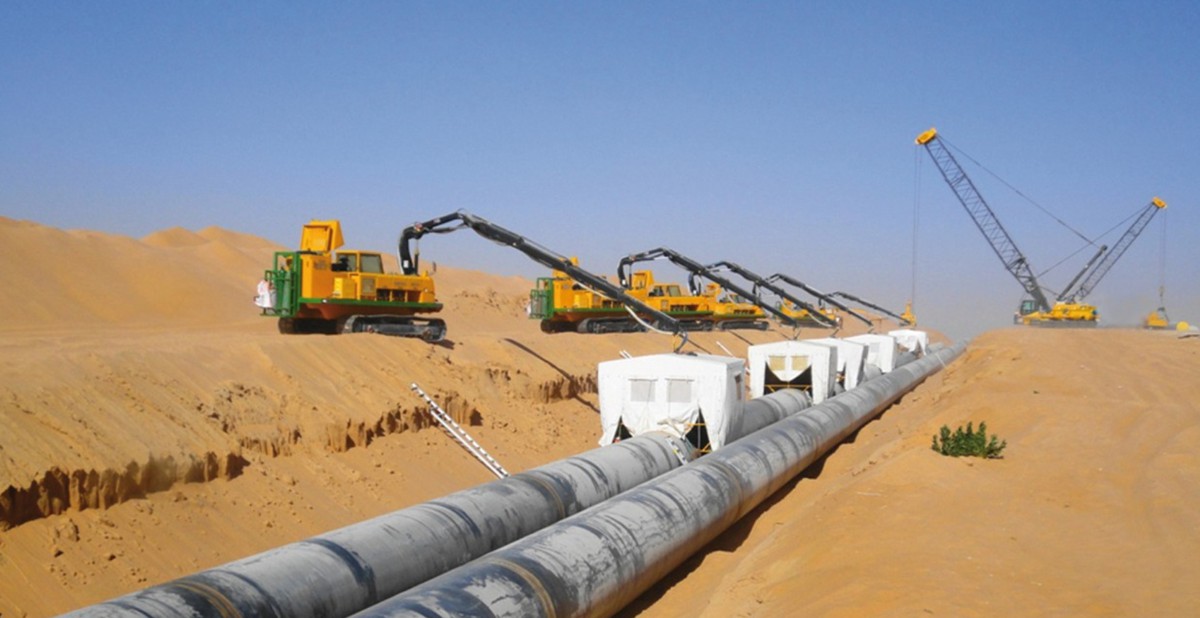
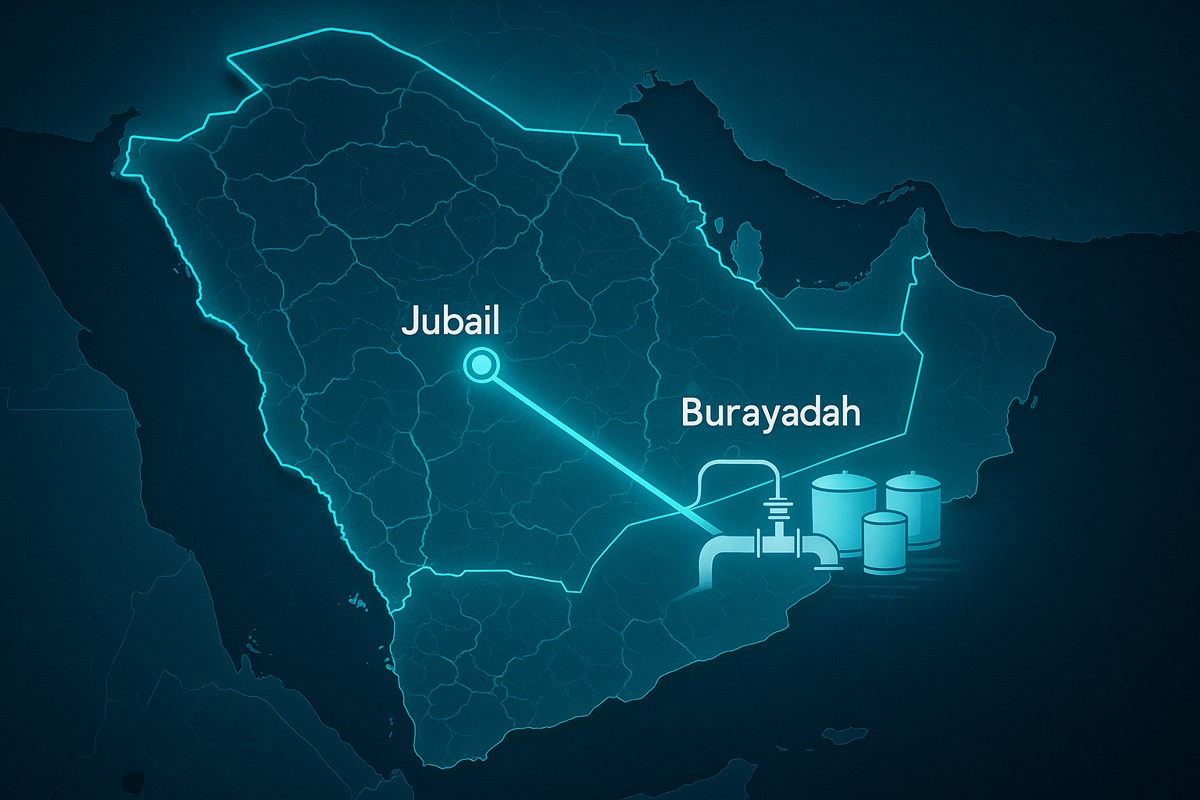
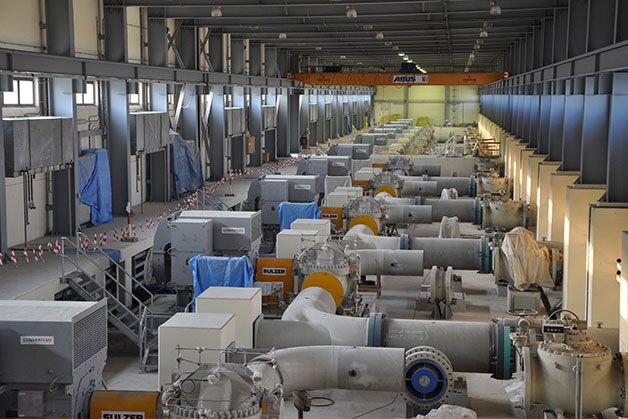
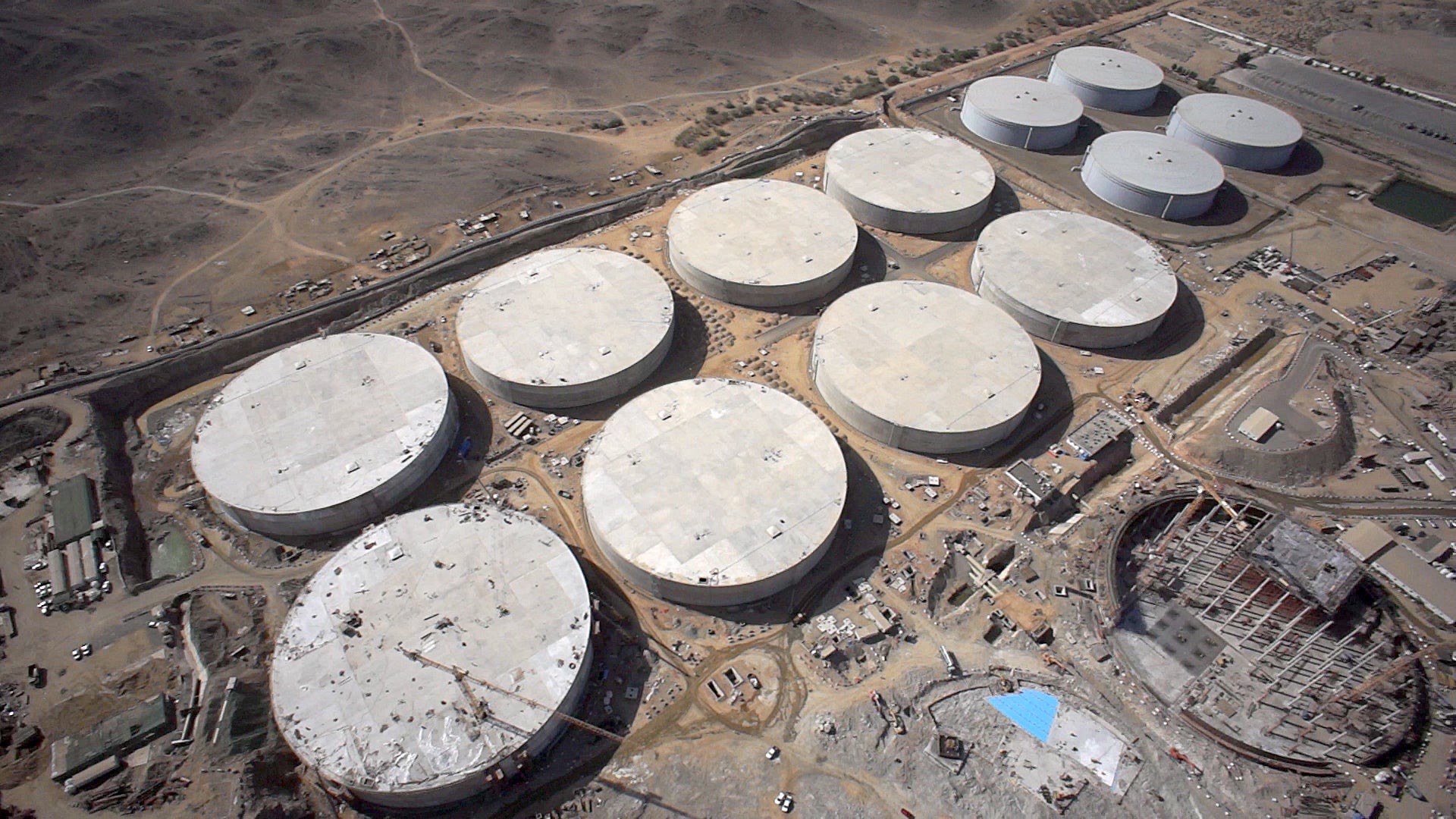

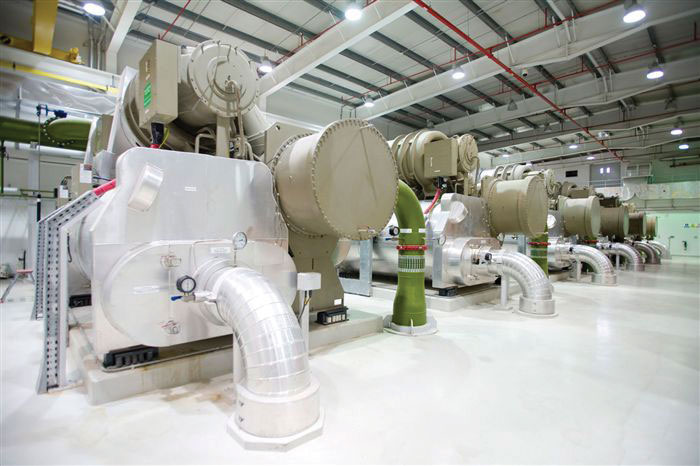
Click any step in the flow above
Each step opens a short description here. The same seven-step backbone runs in every social PPP - what changes between deals is whether the contract model is DBFM, BOOT or BOT, and how much demand risk sits with the SPV.